One Ricoh GR3x To Rule Them All?
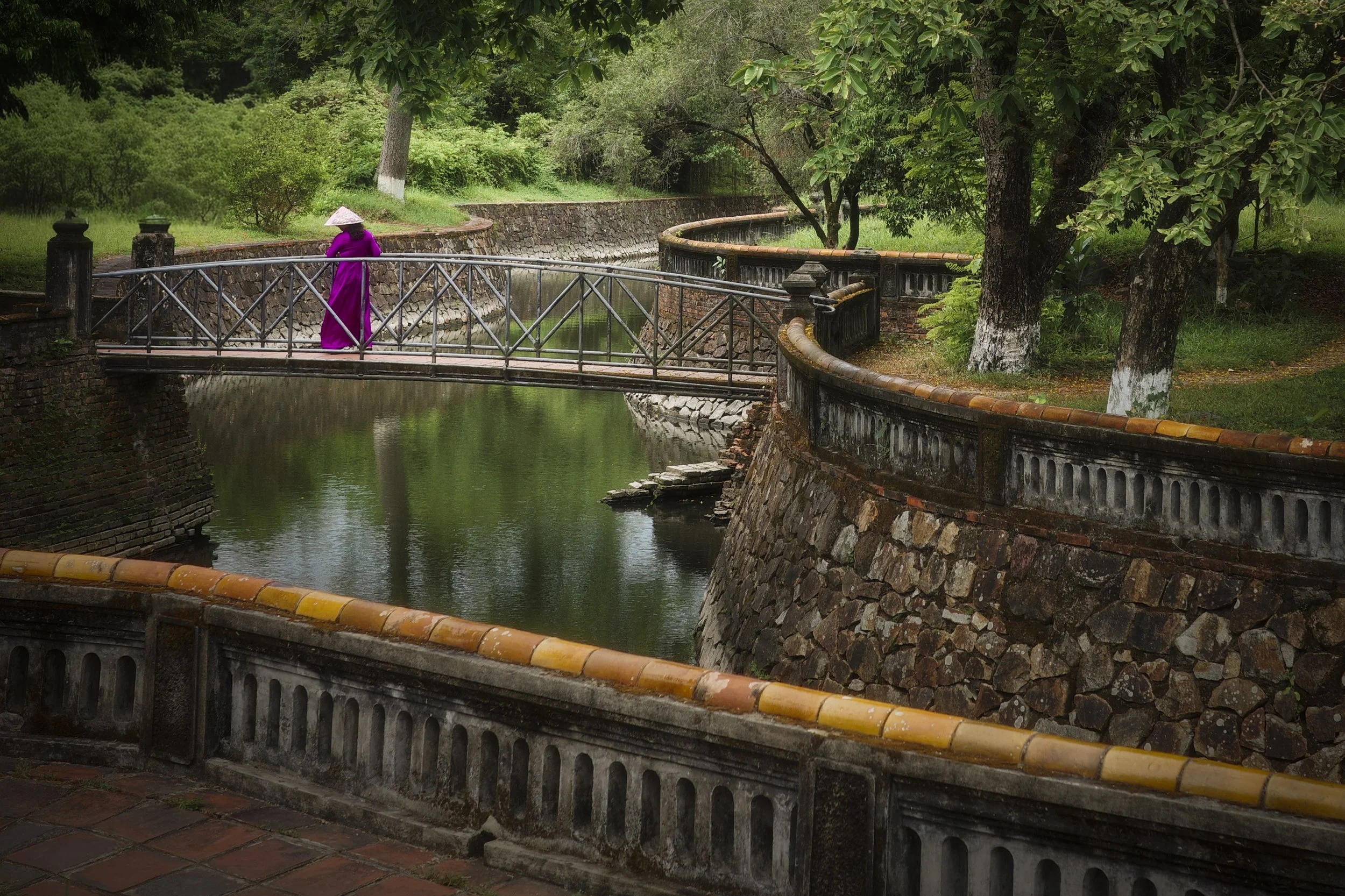
A lady in purple crosses a bridge in The Citadel, Hue, Vietnam. 1/500th f/3.5 ISO 200
As a verified gear addict, what is it like committing to a single, tiny camera for the trip of a lifetime?
I left the Leica Q3 at home. I sold my Sony A7iii and all its lenses. I wanted to be able to wander the streets of Hanoi, the Citadel of Hue and the limestone gorges of Tam Coc unencumbered by equipment, with no bag or strap over my shoulder, no sweaty waist pack or questionable man-bag. Just a little camera in the pocket of my shorts. It’s task: spontaneous snaps, considered photography, and occasional art.
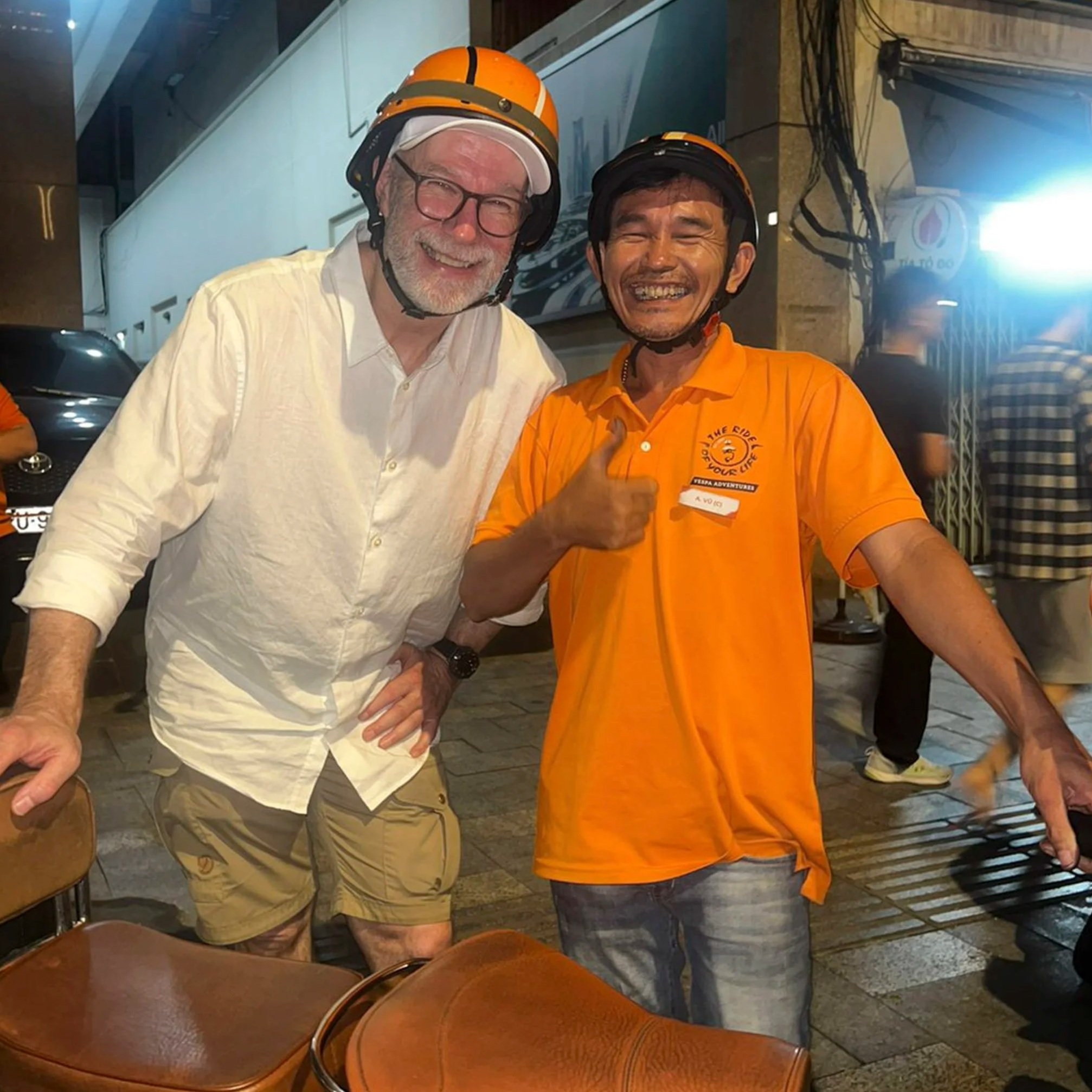
Where’s the camera?
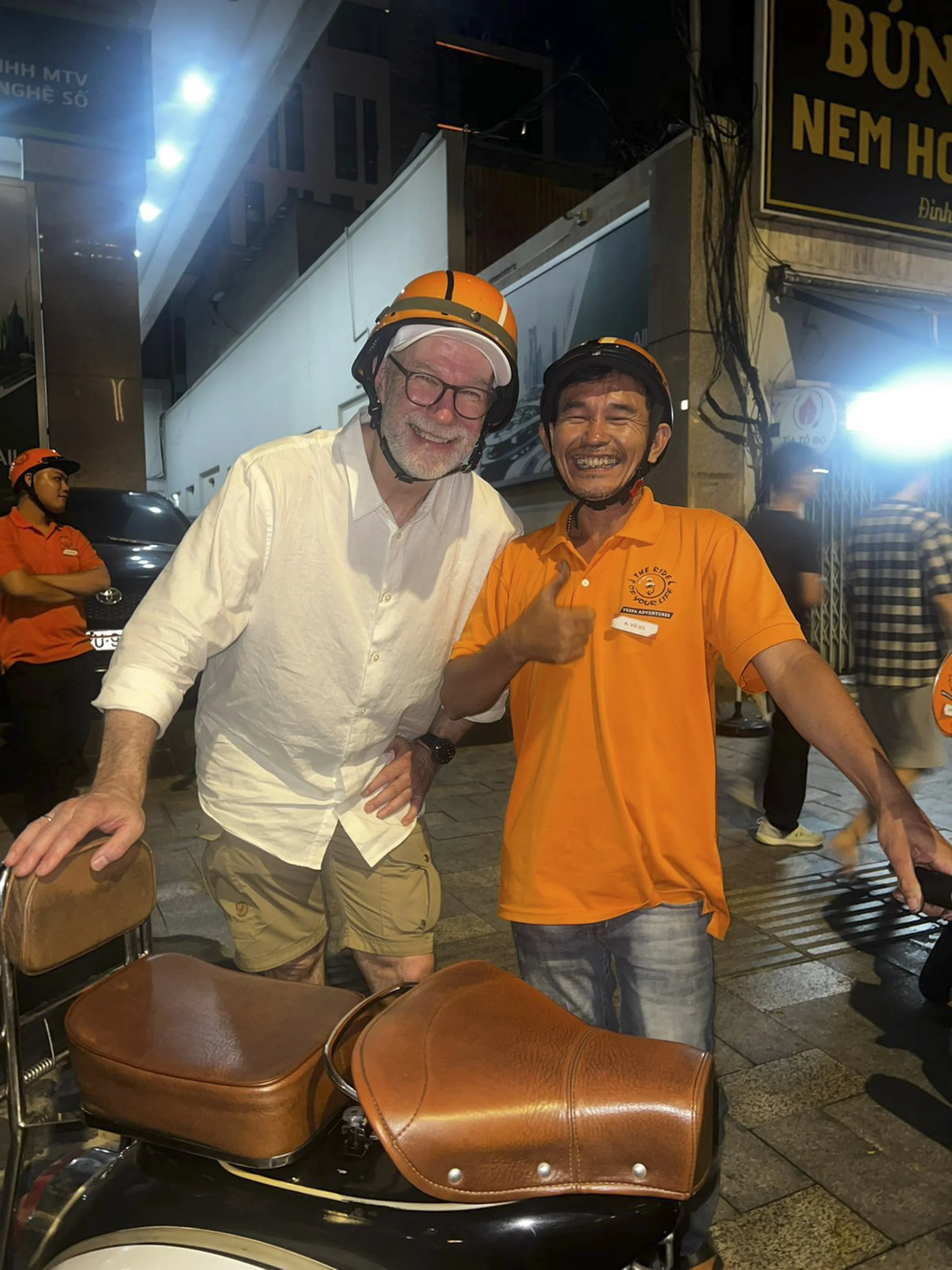
The Ricoh GR3x is in the right hand pocket of my shorts, not that you’d notice (I’m the one on the left!). Here I am getting ready for an insanely superb Vespa scooter tour of bars and street food in Ho Chi Minh City (Saigon). What an experience that was.
Vietnam. Four weeks north to south. A 60th birthday celebration for both Mrs T and I, and a retirement present to myself. Good things come to those who wait, and work hard. We left the detailed planning to a travel agent (remember them?) and made a conscious effort not to do lots of research before we set off. We wanted to be surprised. And wow, were we surprised!
Note that what I have written applies just as well to the new Ricoh GR4 - this is more about the type of camera than individual specifications. With the GR4 newly released, there are bound to be good prices on GR3’s.
Preconceptions
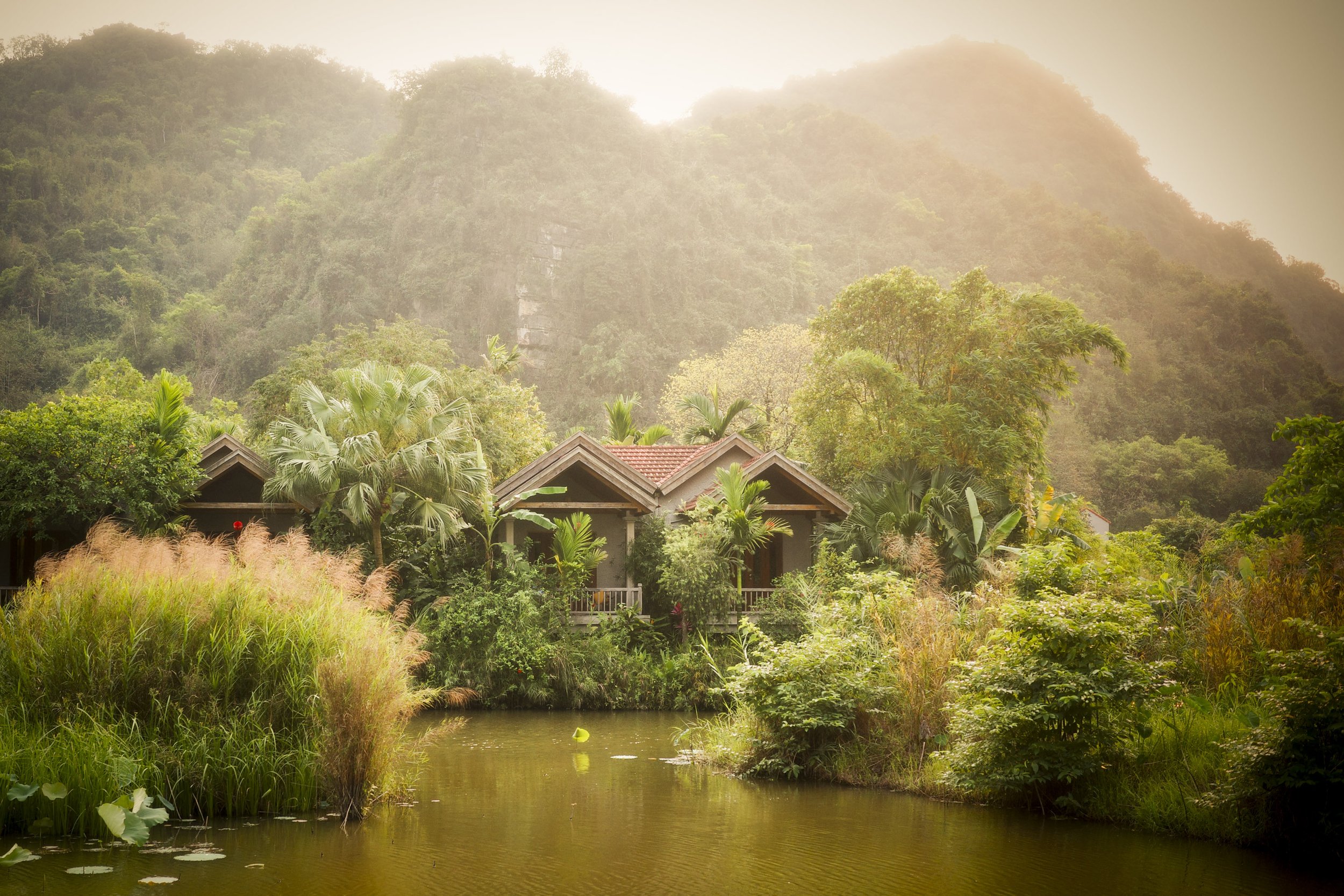
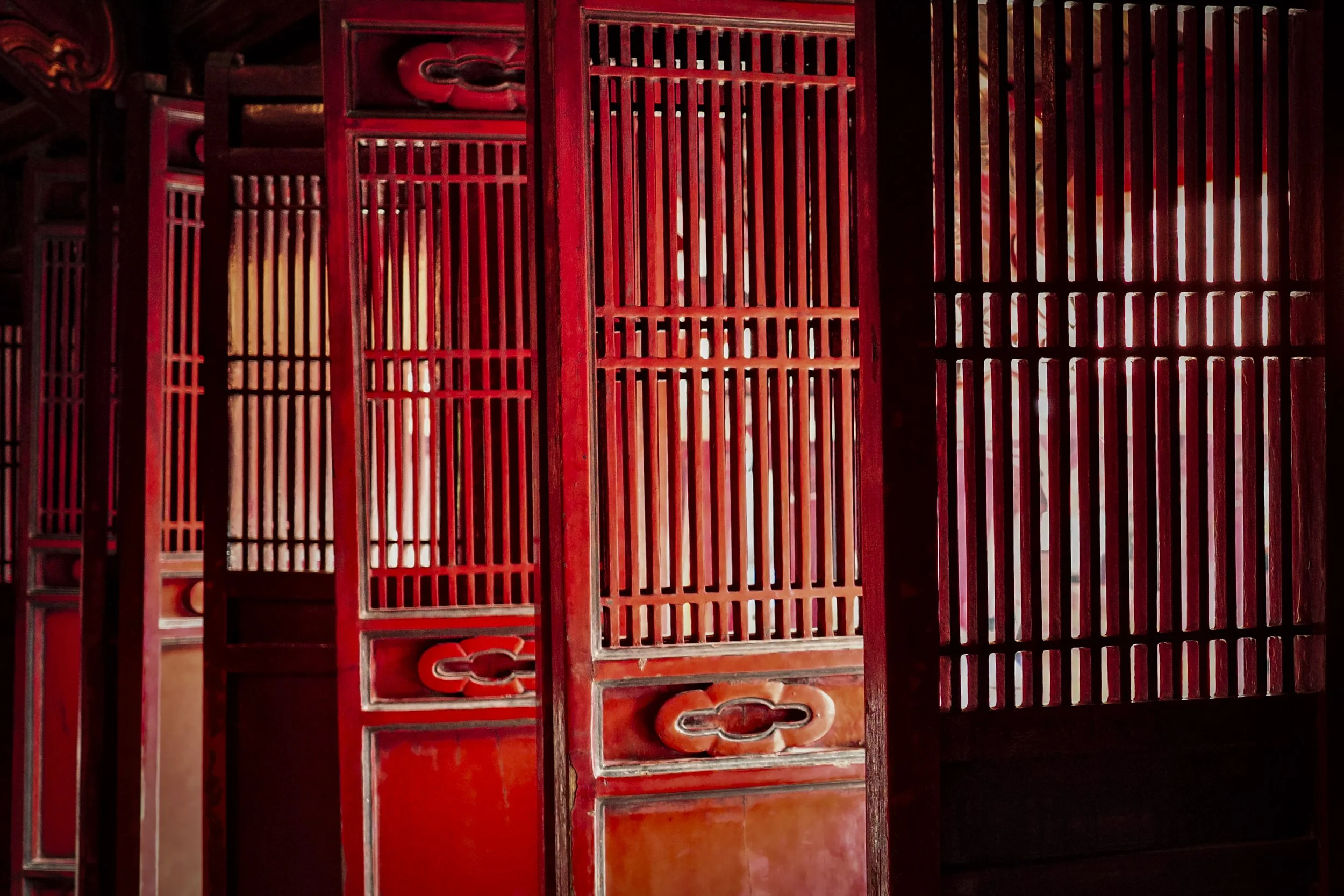
One of our hotels in Ninh Binh. 1/400th f/2.8 ISO 200
Like many others, I had very strong preconceptions of the country. Notably the big-budget Vietnam war films left their mark as had documentary series on TV and the archived newsreels on Youtube. They call it the “American War” in Vietnam, as they have been invaded by so many countries over their history they have to differentiate somehow. There’s nothing like visiting a country, speaking to its people, and learning their history, to understand more.
It turns out Ho Chi Minh would have been happy to partner with America if only Vietnam could be unified and the French expelled. Oh what could have been. What a waste. Now the golden statue of Ho Chi Minh looks out over the official Rolex dealer in the city named after him, previously Saigon, in a country that feels more capitalist, entrepreneurial and alive than anywhere in Europe.
In any event the USA never stood a chance. Learning first hand about the resolve of the Vietnamese people, to live in tiny, cramped tunnels for 10 years, to have their children born down there, to sacrifice themselves, to strive, to survive. Again, what a waste.
Anyhow, moving on from the political situation back then, the country of Vietnam is remarkable, beguiling, intriguing and compelling. Its people are kind, imaginative and very friendly. I am beyond impressed. I will use my photographs to try to illustrate how captivating the place is.
Oh, and…stuff here is cheap.
Arrival
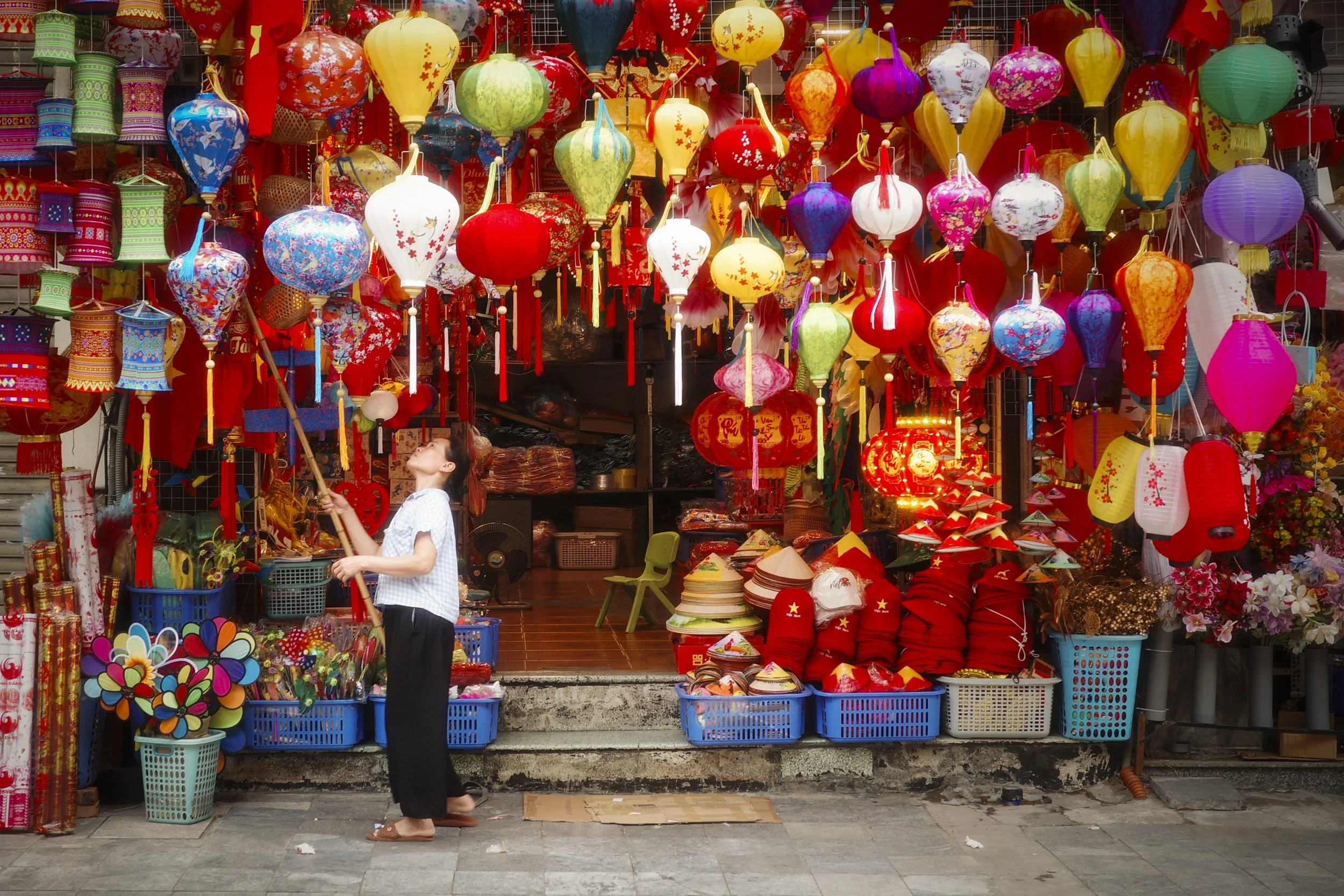
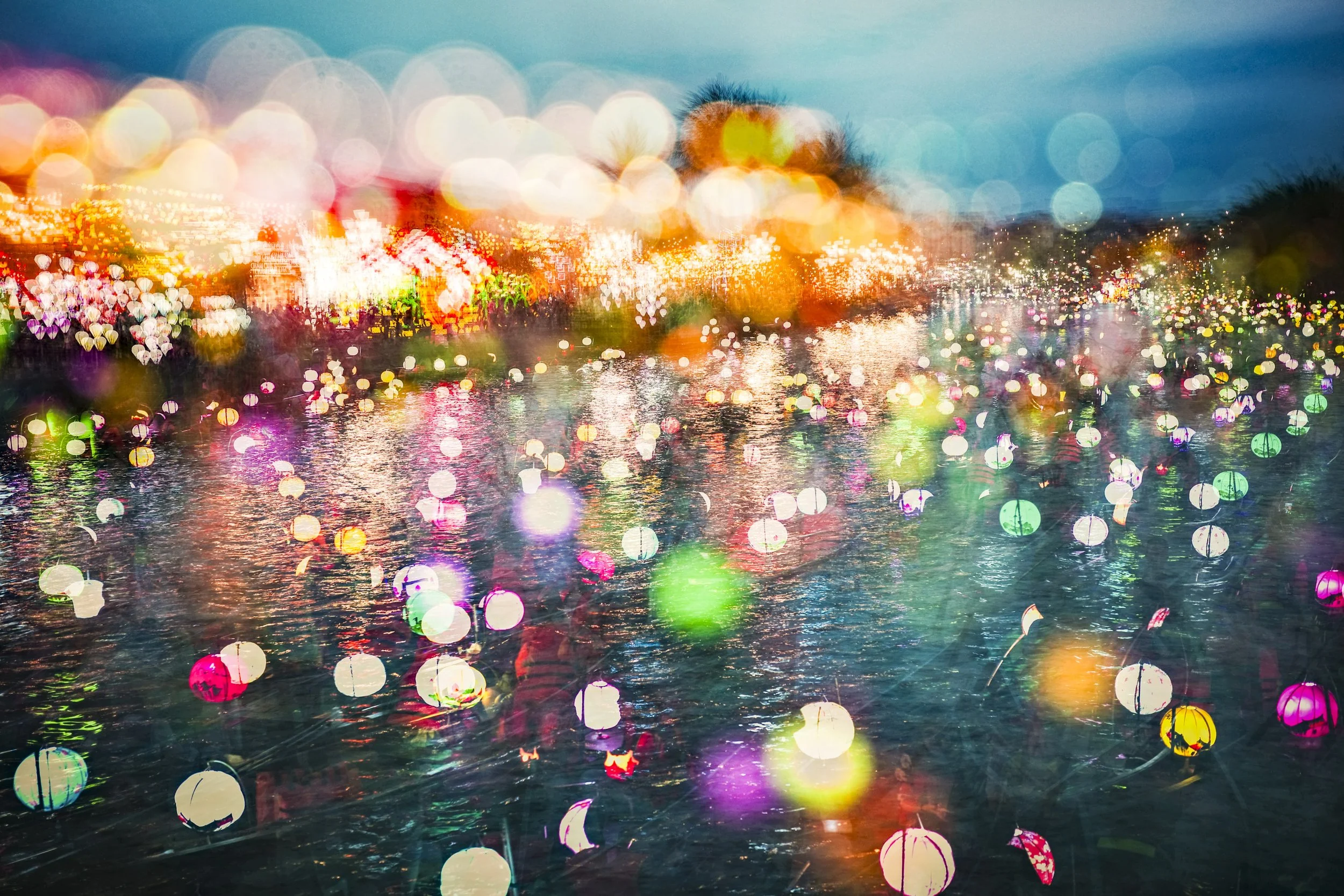
Lantern lady, Hanoi. 1/50th f/2.8 ISO 200
On arrival in Hanoi were dropped straight into an alternative universe. A snaking queue at immigration, then into a car (we had a driver and guide for everywhere) to our city centre hotel, and the madness that is traffic in Hanoi. Millions of scooters, a few cars, and the odd bus all flowing like water with seemingly no rules, and yet the riders & drivers have forward observation and traffic flow prediction like I’ve never experienced. The first lesson was how to cross the road. Just set off, the art is to make smooth, steady, progress as everyone works around you.
Pocketing the GR3x HDF I headed into the heat to “Train Street”, a famous tourist spot where the train track from Hanoi station runs between closely stacked buildings, which have been converted into bars and cafes where tourists can experience a scene like no other. “Health and safety” be damned, as huge trains lumber mere inches from the knees of bar-goers with their outstretched mobile phones gathering the experience for posterity.
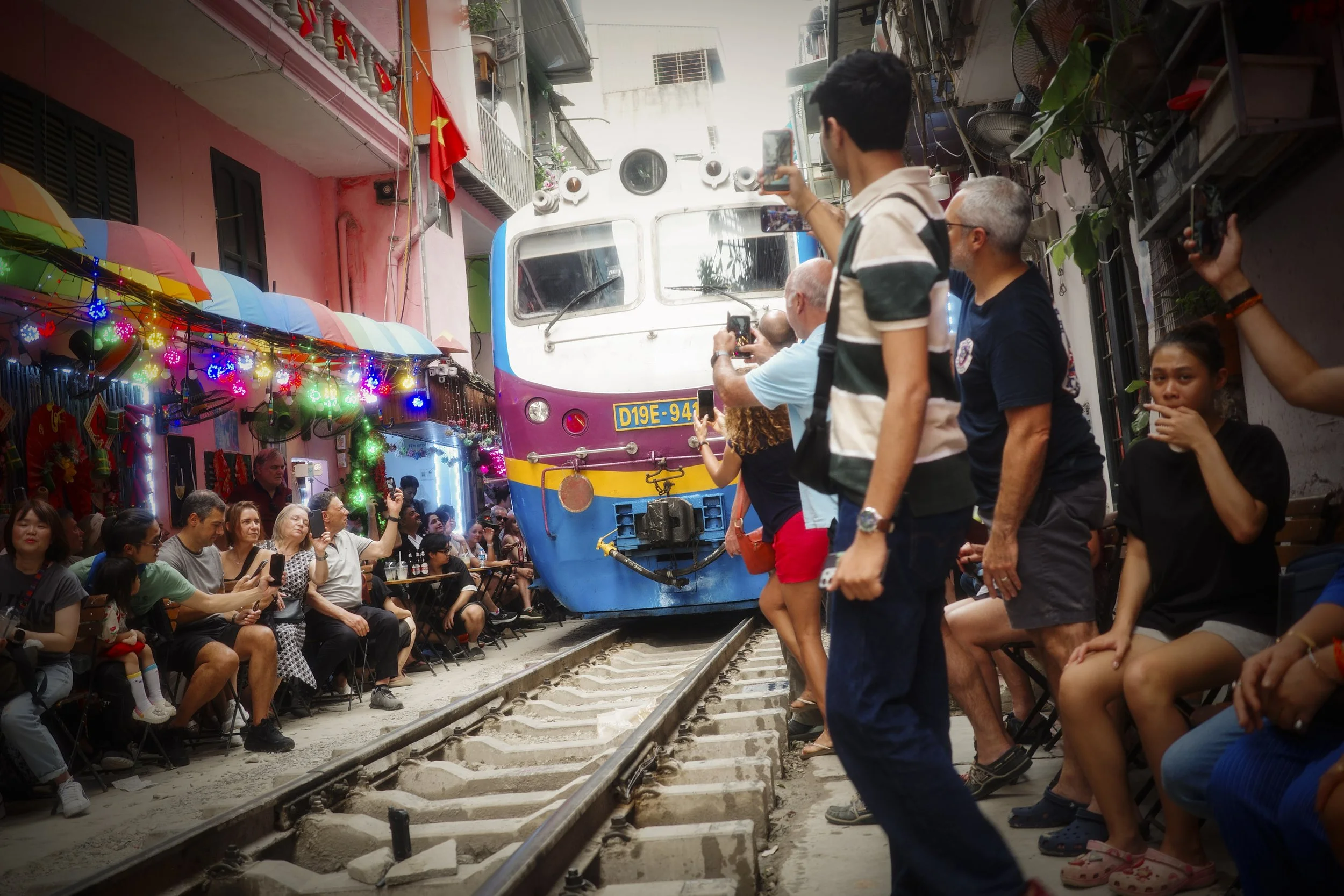
Train Street craziness. 1/100th f/2.8 ISO 200
It is madness, yet brilliant. Scarcely believable. How can it be allowed? Is it allowed? Apparently the government banned it, but here we are. Who knows? But it makes for brilliant photography. I know it’s a “trophy shot” but it cannot be ignored. You have to get in position at your bar of choice at least thirty minutes before a train is due.
I found the 40mm focal length of the GR3x is excellent for my photography on this trip. If the camera had a higher resolution sensor, I think I’d be OK with the 28mm non-x version. Like my Leica Q3 that would give lots of croppability. I found I needed a wider focal length just a few times so in those instances I used my phone (Samsung Z-Fold 7). I’m hoping to try out the new Xiaomi 17 Ultra “Leitzphone” shortly and it will be interesting to see if that could replace the Ricoh for just a single-device setup.
At Train Street, I used continuous autofocus and continuous drive mode, with all the other settings on manual so as to not confuse the camera due to the train headlights. Even though the buttons are small, it is pretty easy to adjust everything.
Here’s a top tip if you are ever in Train Street: As well as shooting the front of the train as it approaches, also shoot the back as it rolls away. The front and back look the same, and all the tourists lean in as the train finishes going past, so to anyone looking at the photos afterwards it looks even more perilous as in the shot here. And it looks cool at night too.
Go-To Camera Settings
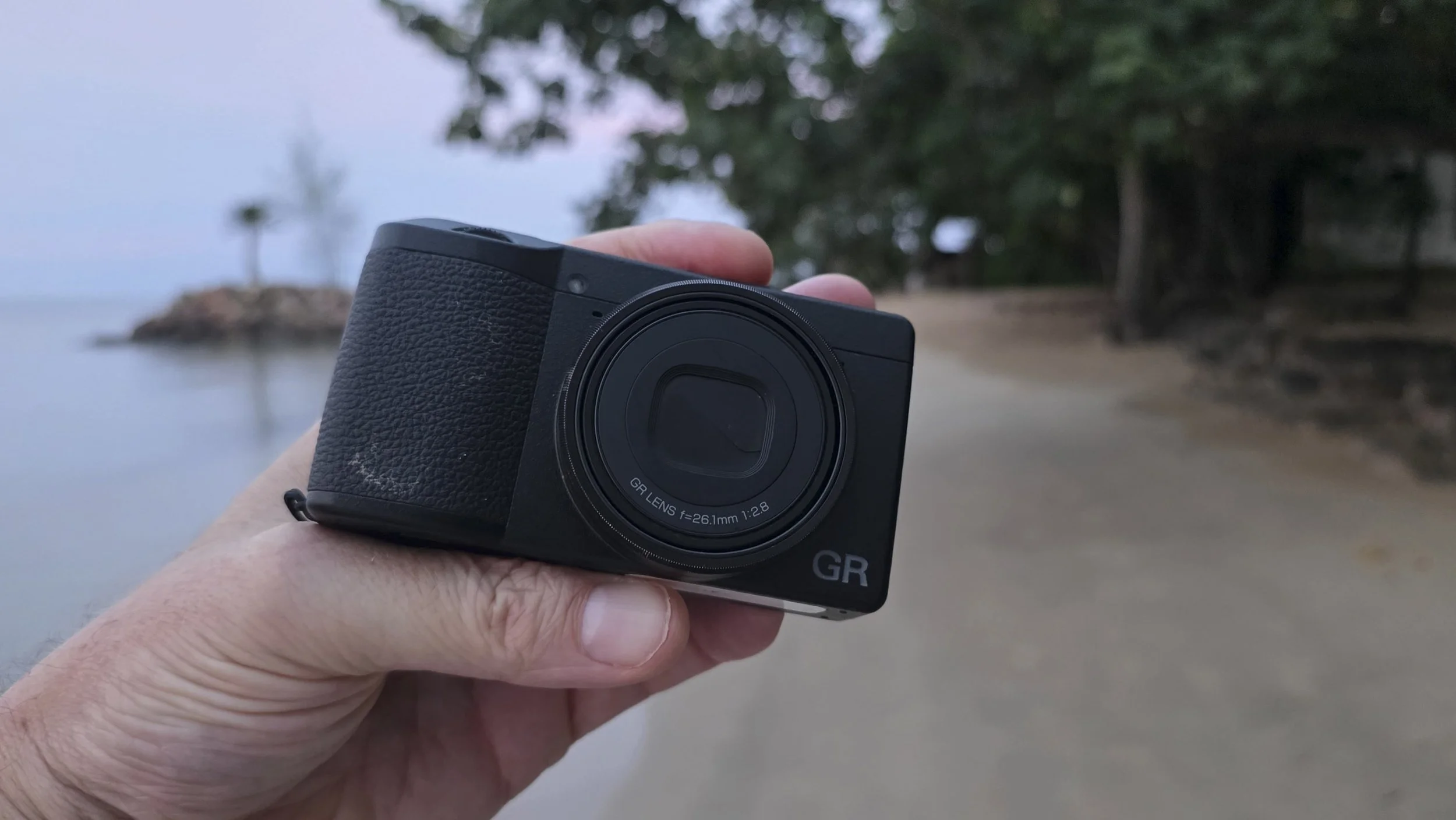
It’s so small, and a bit dirty
I use the user-presets a lot on my Ricoh. I have U1 set up as my favourite recipe for general photography, with:
HDF on (gives a slightly gentle soft-but-sharp look)
Focus: select AF with touch screen to position
Single frame drive mode
Image control: Positive Film with +1, 0, -1, +3, -1, -2, 0, -2, 0
D-range auto
Shake reduction on
RAW + jpeg
White balance: multi-auto
Exposure mode P
Program line: max aperture priority
ISO auto 100-6400 min shutter 1/40th
Metering: centre weighted
Peripheral image correction off
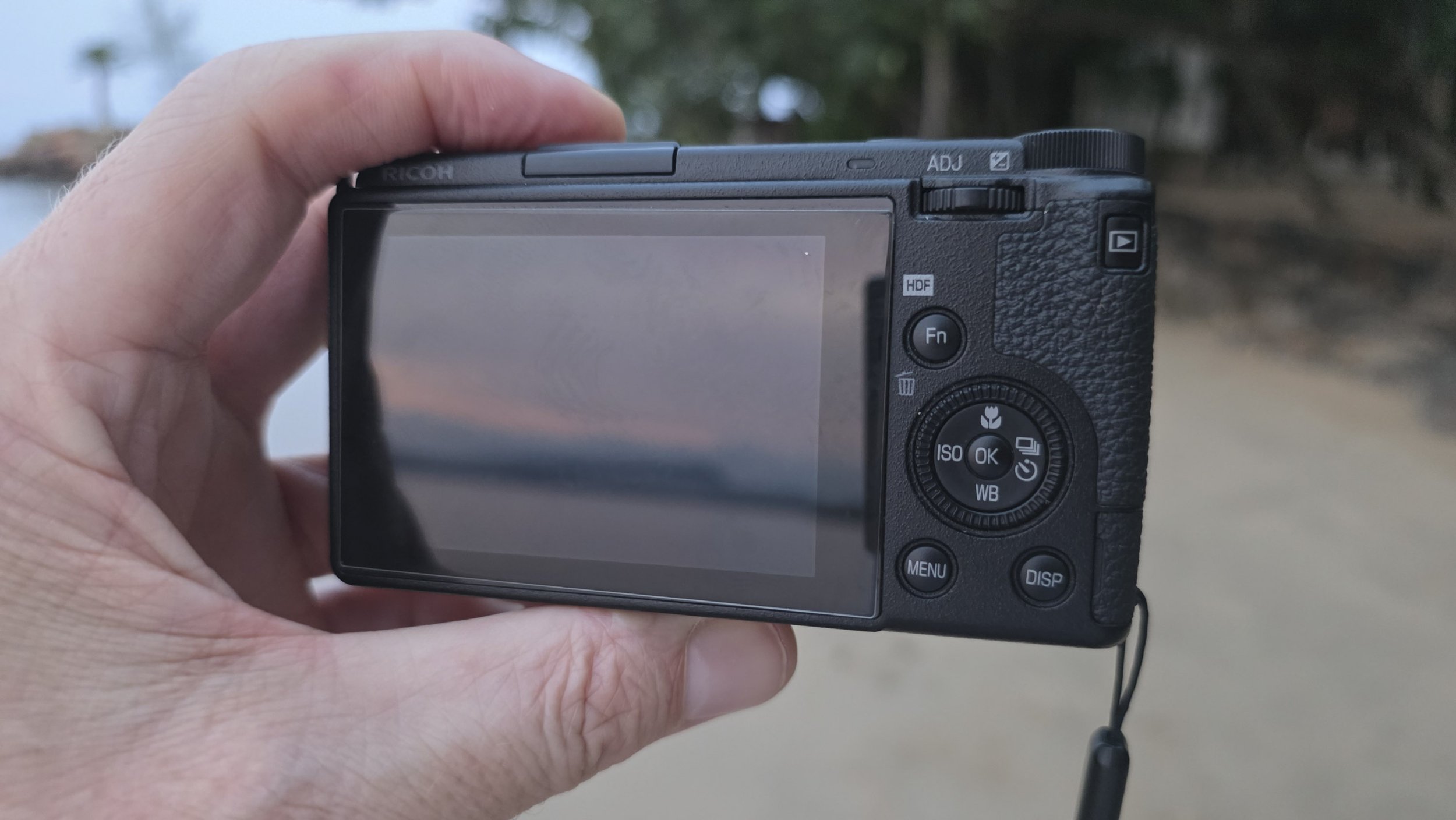
The back of the GR3x. The new GR4 has some useful changes.
Any of these settings can be overridden easily. Exposure compensation can be dialled in with the rear rocker. I can adjust the aperture manually with the front dial. When you select another user preset, or re-select U1, everything goes back to that preset’s original settings which is nice as you always know “where you are” and can start from a known baseline.
All combined, especially the Positive Film setting with +3 contrast and -2 shading (vignetting), means I get something really quite close to the output from my old Leica M9 with a Zeiss 50 1.5 on it. The jpegs feel colourful and dynamic. Not much processing is needed.
Workflow, Lightroom Mobile
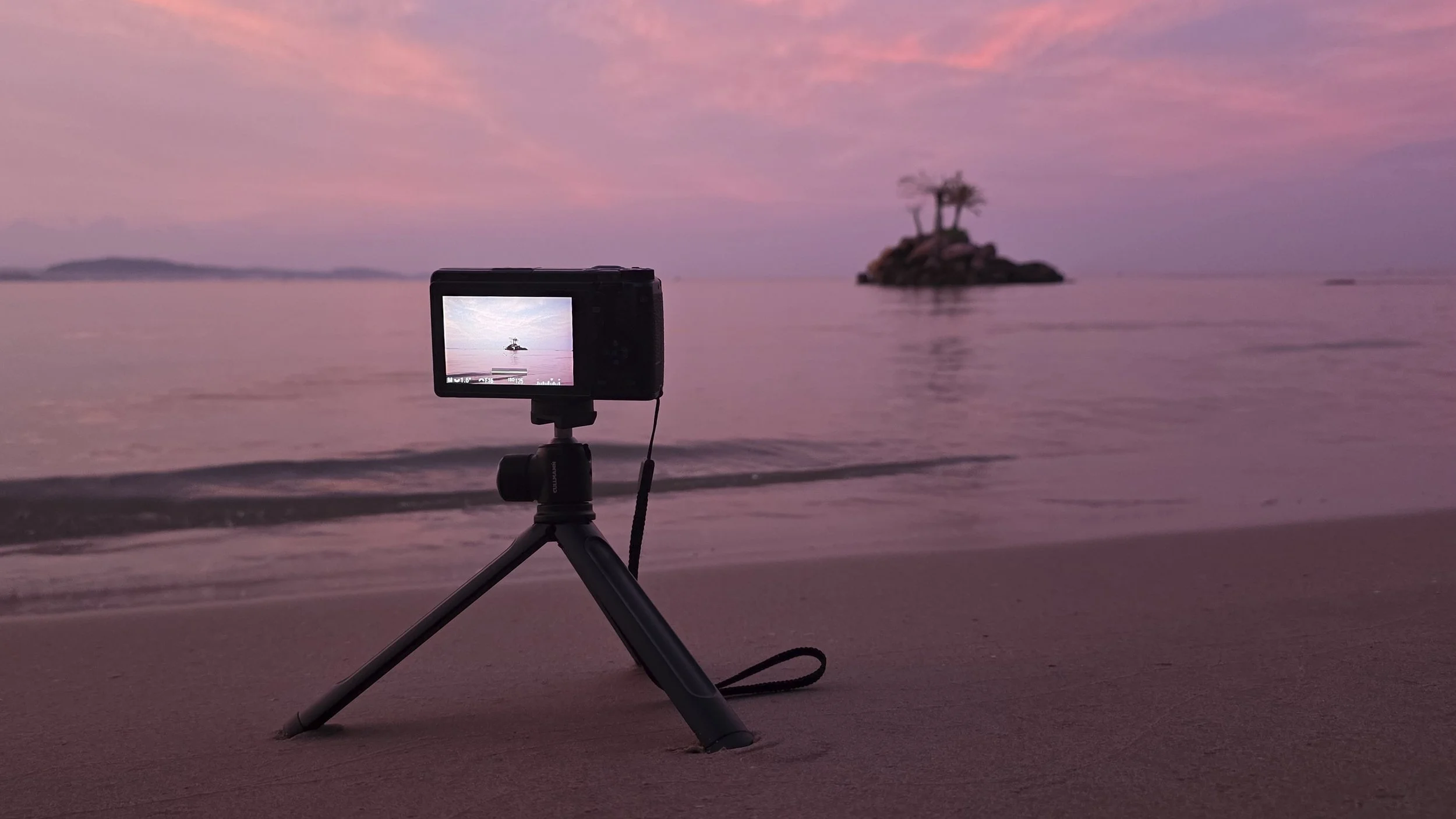
Tiny camera, tiny tripod, doing their duty before dawn on Phu Quoc Island.
During the trip I was transferring jpeg images from the camera to my phone using the older Ricoh Image Sync app (having forgotten to update the camera’s firmware to the latest version that would let me use the new GR World app). The transfer process is a bit hit-and-miss. Using a VPN on my phone screwed it all up completely. It’s not very speedy, but it did what I needed.
This got the images into my phone’s gallery. I then loaded them into Lightroom Mobile and worked on them there, editing as needed, setting captions, pick/reject and star ratings. The large inner screen of my Samsung Fold 7 really helps with image editing but the workflow is a bit clunky as the move into Lightroom creates another copy of every image, sapping the phone’s storage space. This is annoying and silly - Lightroom should just reference the existing image file in the camera.
This meant once I had imported into Lightroom, I’d then have to delete the now-duplicated images in the phone’s gallery, work on the copies in Lightroom, and then export the resulting edited images back into the phone’s gallery for sharing etc.
Despite this import/export clumsiness, Lightroom Mobile continues to impress. All my Vietnam images are in a gallery that is synced to Adobe’s storage, so I can get at them from any device that I am running Lightroom on (though just full-size jpegs in this case). Nice. Even advanced editing like AI object removal, select sky, select subject etc. are all present. Impressive.
Just a point to note that moving GR3x jpegs around is a lot easier than, say, 60mb RAW files from a Leica Q3!
All the images in this article are jpegs handled in this way. The RAWs are lurking on the camera’s memory card in case I feel the desire for any really detailed editing.
Day-To-Day Photography
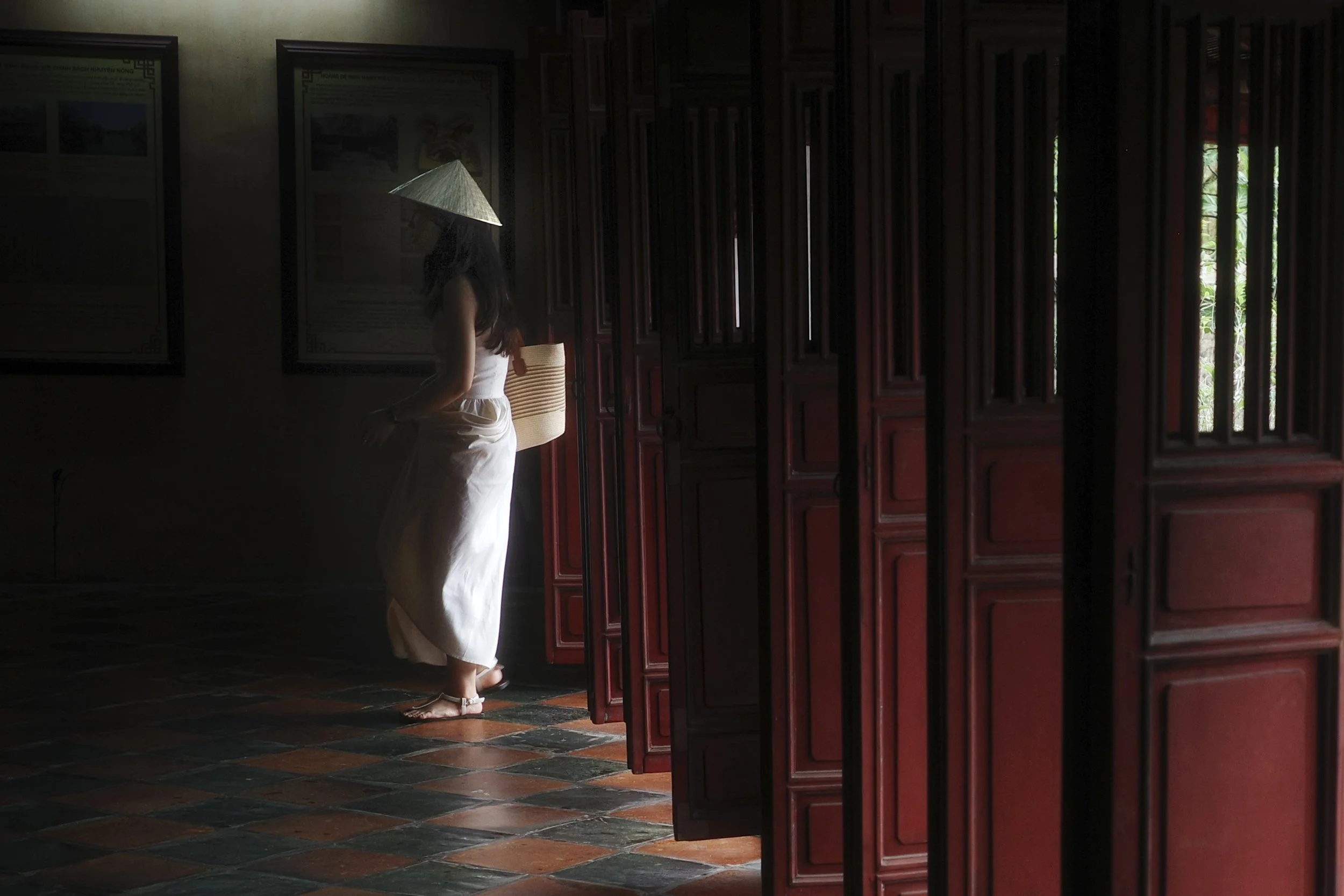
Quick grab shot as a lady in traditional dress enters. 1/125th f/2.8 ISO 200
We saw a huge amount on this trip and the photo opportunities were many and varied. After breakfast, I’d slide the Ricoh into a pocket in my shorts as we got ready to meet our guide and head out. I never took an extra bag with me. Wallet, phone, camera each in their own pocket. Fjallraven Abisko summer shorts are recommended.
It was hot. 38C (100F) at its height, and 75% humidity when we were at the Cu Chi tunnel complex which was somewhat overrun by tourists despite the heat. Hey, it’s really hot, let’s go into some even hotter underground tunnels that are tiny and dark! The lady in front of us had a panic attack down there and had to be helped out. Other places like Hanoi were 35C but felt hotter. We probably travelled a bit late in the season but we couldn’t get away earlier in the year.
Despite the heat and humidity, the only precautions I took with the camera was to use a basic wrist strap and a metal “GR” lens cap. I find the little plastic “leaves” that cover the lens to be rather fragile when the camera is bumping about in a pocket, so the little metal cap came in handy.
With so much going on, the Ricoh was with me everywhere. Fast and easy to use, as well as inconspicuous, I was able to weave as much photography into our outings and activities as possible. No waiting to get the camera out of a bag. No changing lenses. Just a quick spotting of a nice scene and then point-n-shoot.
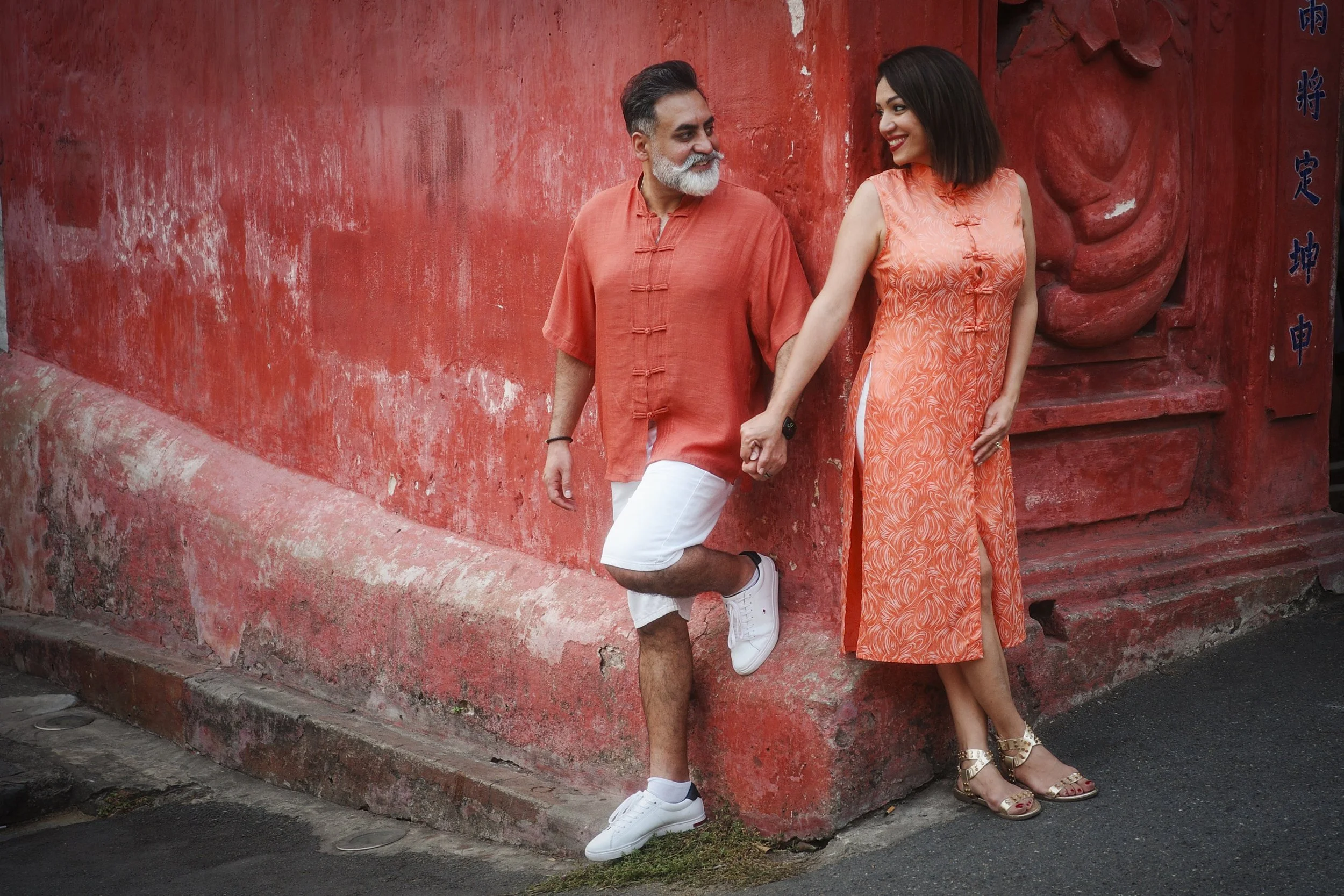
So much red! Quick street shot. 1/50th f/2.8 ISO 200
I normally had the focus point in the middle of the screen (so easy, press OK, then hold OK) and used focus-and-recompose. Sometimes if I was taking several shots of the same scene with the subject off-centre, I’d use the rear touch screen to tap where I wanted the focus point to be which is faster than pressing OK and moving it with the circular rear dial.
In P-mode (as in my U1 preset), and with “max aperture priority” set, the camera would start off at f/2.8. I like this, as I find a bit of focus falloff is nice for many compositions. If I wanted everything sharp, I’d twiddle the front dial to change the aperture. If I wanted a bit more or less exposure, the rear rocker/slider switch would do that.
When using the camera one-handed, the controls are rather cramped at the right side. I ended up with a weird claw-hand style grip so I could get to everything. Unencumbered with any bags or other stuff to carry though, it was simple enough to use two hands when needed. But that exposure compensation slider is in an annoying place and I can see why they moved it in the new GR4.
No Viewfinder or Tilt Screen
Of course, there is no viewfinder. I like a viewfinder for exact compositional accuracy. Seeing the image so much larger makes it easier to spot things that aren’t right. Even in the bright sunlight in Vietnam, the rear screen of the Ricoh was OK with the brightness turned up. Occasionally there was some “press-and-hope” sort of stuff where I knew I’d be able to sort things out when editing with a bit of cropping and levelling.
I do like the tiny pop-up viewfinder of the Sony RX1 and RX100 series. If only Ricoh could do that it would be great.
But overall I’ll take a lack of a viewfinder rather than a larger camera any day for this kind of photography. Having the camera with me all the time is far more important.
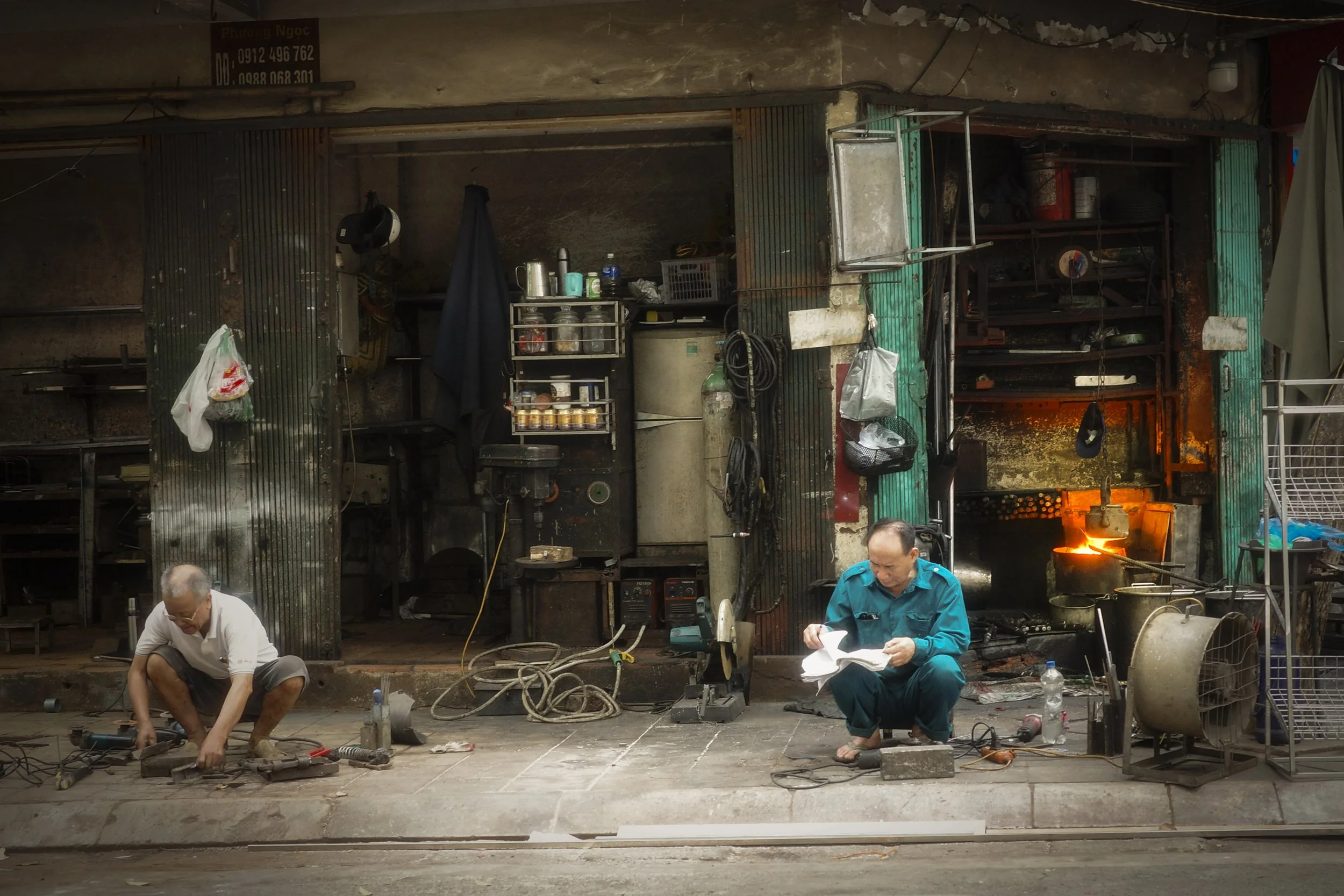
Pavement blacksmiths. 1/40th f/2.8 ISO 1250
A tilt screen would be really useful in many situations, such as shooting low at Train Street. I did think long and hard about a Sony RX100 when buying the Ricoh, but I decided that sensor size, prime lens quality and user interface was far more important. Sony has shown you can get a tilt screen into a tiny camera so it is a bit disappointing that Ricoh’s GR4 doesn’t have one.
I also had a good gawk at the RX1R mk 3 having previously had and loved the original RX1 but discounted that due to it not being comfortably pocketable and being rather expensive.
No Zoom
No problem. I find 40mm to be a really good focal length for travel. I am used to 28mm on my Q3 (no no must not think of the Q3 43) and I use it a lot for landscapes and environmental portraits. With 40mm, I found that I could just step back a few paces if I needed to and it works really well for travel.
40mm brings a lot of goodness out of the sensor as well, with the aforementioned focus bokeh helping to elevate images way above smartphone standard.
I didn’t really miss a longer focal length. Occasionally it might have been nice, but again I value the convenience of a tiny camera much more than having a larger zoom lens stuck on the front.
Long Exposures
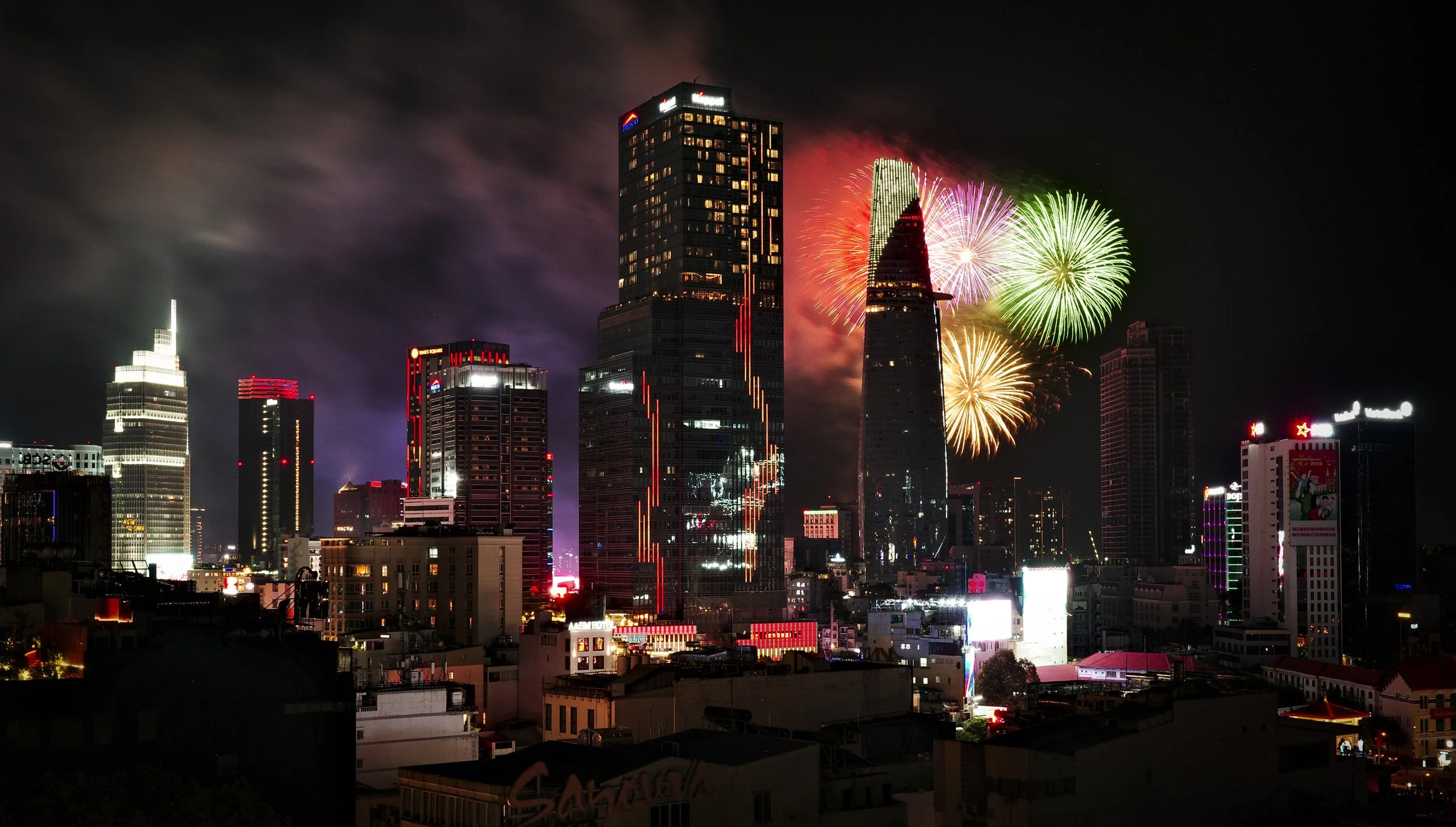
Reunification Day fireworks over Ho Chi Minh City. 3 sec f/9 ISO 125
I bought a tiny “Amazon special” tabletop tripod with me thinking that I’d occasionally get some long exposure opportunities. With no ND filter in the camera (the inbuilt ND is replaced with a highlight diffusion filter in the HDF version), I knew I would be operating very early before dawn or after sunset to get anything useful. Overall I am happy with my decision to get the HDV camera rather than one with an ND filter in. The HDF filter adds a sort of vintage smoothness and sharpness to the images which I like, though I often forget if it is on or off.
Happily, Reunification Day brought the first chance. This is a national holiday when everyone celebrates north and south Vietnam coming back together. We were in Ho Chi Minh City (Saigon) for the occasion and we booked a table with a view at the hotel’s rooftop bar for the planned fireworks.
Wow, what a setting. Illuminated buildings, a warm breeze, cold beer, a DJ pumping out cool music, and all the staff in green army uniforms with yellow stars on. I stuck the camera on the little tripod and got ready. Manual mode, shutter at 3 sec as the main priority for the fireworks, ISO as low as possible at 125, and aperture at f/9 to get the right exposure.
I manually triggered the shutter very gently, with no timer delay as I wanted to get the timing spot on. I tried using the Ricoh Image Sync app for remotely triggering the shutter but it was just too slow as it would transfer the shot to the camera every time, meaning I had to wait for that t complete before shooting another frame.
And wow did we get a treat that night. Having the fireworks set along the city skyline gave excellent scale, and the colours were lovely.
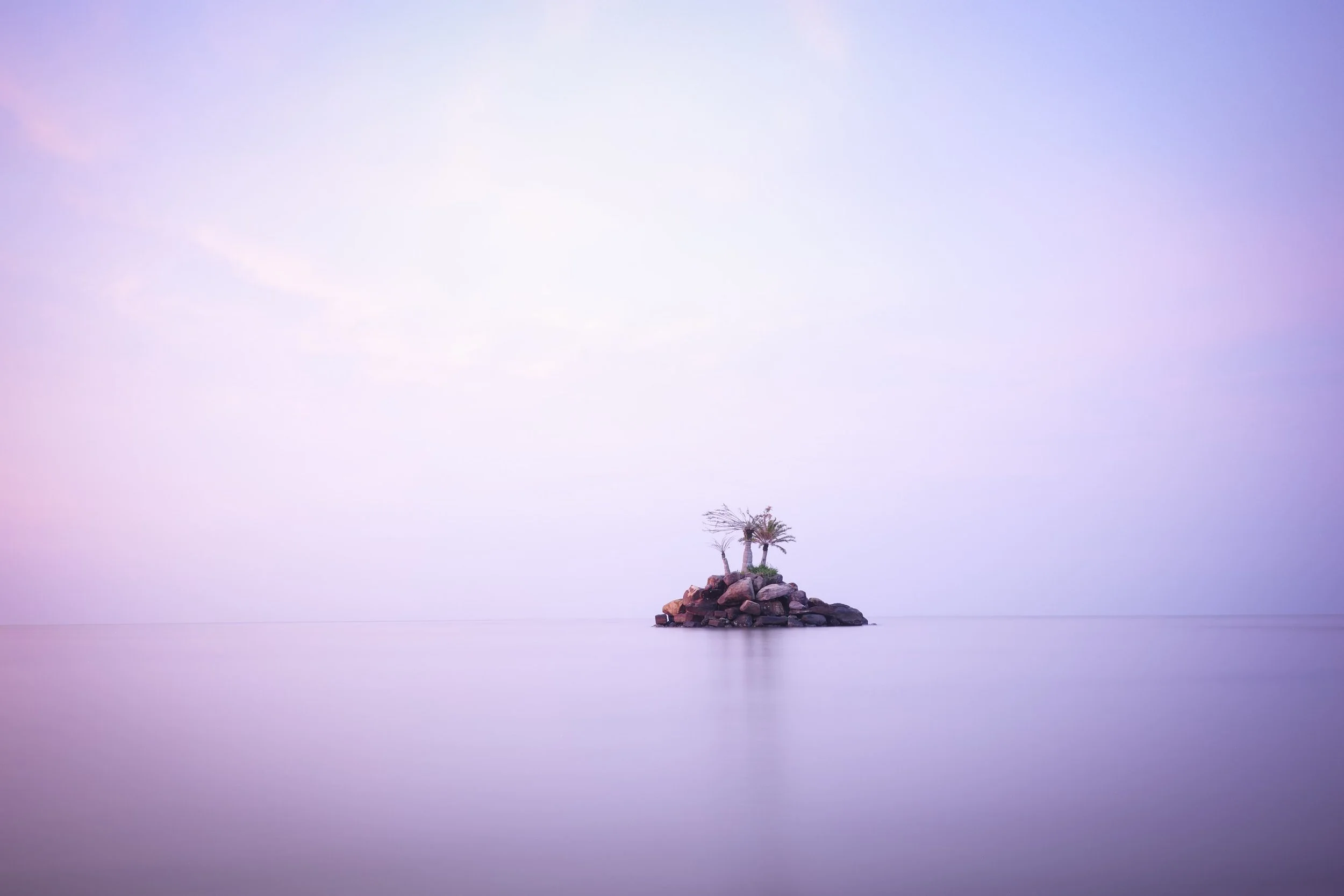
Island before dawn, Phu Quoc. 30 sec f/13 ISO 125
The next opportunity was at the super-lux Green Bay Resort on Phu Quoc island right in the south. We had 5 nights there at the end of the trip to unwind and do nothing. We had been on so many excursions, visits, activities every day that it was a very welcome rest. Sited on its own beach, and with a little island just offshore, it was ideal for a long exposure seascape. I decided on pre-dawn as the many fishing boats with their bright lights would be turning them off as the sun rose, and the resort lights would be off as well.
After a couple of aborted attempts, ideal conditions came on our penultimate morning at 5am. The sea was flat calm. The sky was getting just enough colour. No brightly lit fishing boats in shot. I shoved the tiny tripod into the sand by the water’s edge as little waves lapped with gentle sploshing sounds, and the frogs croaked behind me.
30 seconds, f/13, ISO 125. Two-second delay on the shutter. Bosh. A smooth, dreamy seascape just how I like them.
Dust on Sensor
That long exposure session exposed a flaw! A dreaded dust spot on the sensor. I have read about dust getting on the GR3’s sensor due to the bellows effect as the lens pops out, sucking air into the interior of the camera.
Dang. I had hoped I wouldn’t be affected. As I usually shoot at f/2.8 I hadn’t noticed it before. Dust on the sensors of fixed lens cameras is a real problem as you have to dismantle the camera to clean it. Not easy.
This is a really annoying thing to happen. I know it happens with Leica Q series cameras and other fixed lens cameras including the X100VI. It isn’t acceptable and manufacturers have to do better.
Looks like I will be doing some dismantling in the near future.
Optimising Opportunities
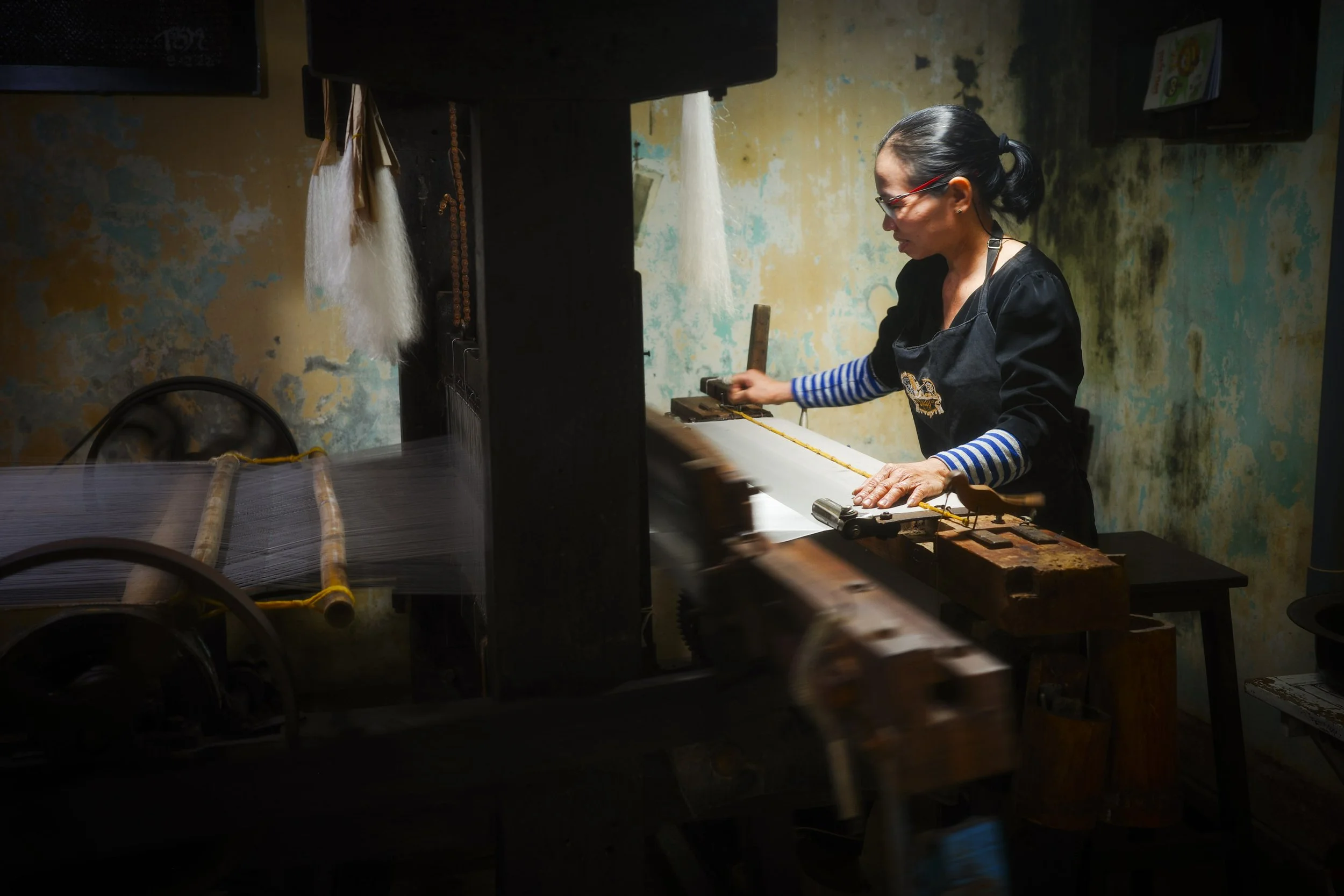
The GR series really excels at capturing fleeting moments. I was able to photograph little scenes of shape and colour inside busy shops. A loved-up couple blending nicely with a colourful wall. A lady weaving silk in a back street workshop. Another lady in a purple dress crossing a bridge. A sweat covered guy splitting hundreds of coconuts by hand on an upturned spear.
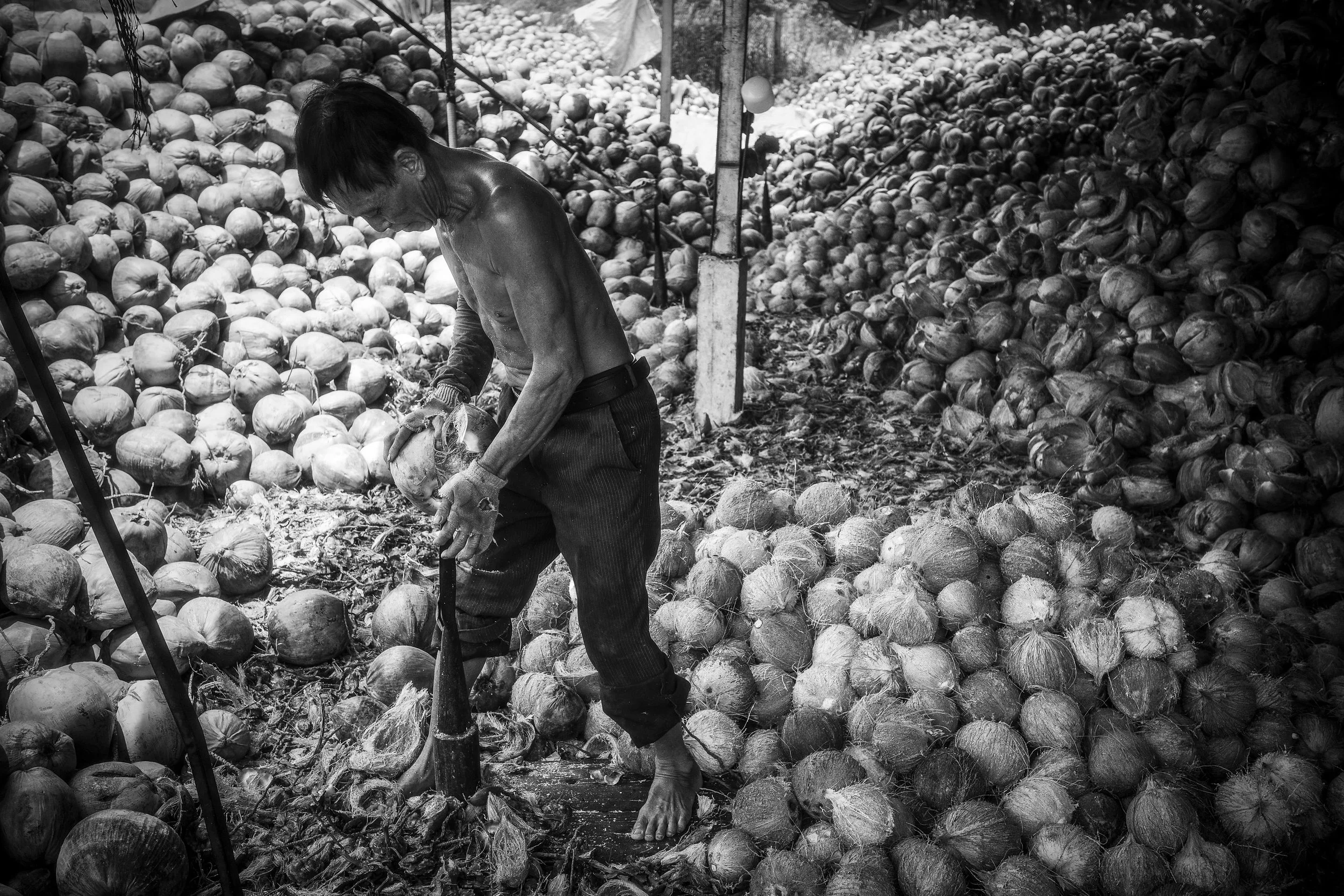
Splitting the husk off coconuts. Incredible work rate. 1/640th f/3.5 ISO 200
I’ve been the guy with the big DSLR or Leica M and the “holy trinity” of lenses, trying to grab a shot and being somewhat disengaged, concerned about my gear or worried about getting focus quickly enough. With the Ricoh it’s subtle, fast and easy while still being possible to be present and with the subject of the photograph. Don’t get me wrong, I’d have enjoyed having my old M10 and a 50 Summilux, but it wouldn’t go in my pocket.
The Ricoh works very well for spontaneous photography without getting in anyone’s way, yet while keeping very good image quality and utility.
Wrapping Up
If you can’t tell already, I think the Ricoh GR3x HDF did a terrific job on this trip. The whole holiday was magical, significantly exceeding our expectations. The Ricoh captured lovely moments and scenes that will trigger great memories for years to come.
It can often be difficult juggling a runaway photography interest with a trip alongside a loving partner who isn’t quite so into the whole picture taking thing. I find myself feeling guilty for interrupting a tour of some famous site because I want to photograph an intriguing-looking door. Mrs T is very understanding but I am always very conscious about not letting my photography get in the way or dominate proceedings.
I feel that the Ricoh really helps from this perspective. It allowed me to indulge in high quality photography without all the paraphernalia and drama that comes with lots of kit. This is one of the most underrated and little-mentioned factors of small, high end cameras like this.
The Ricoh is a pocketable powerhouse. Versatile, tiny, high quality. Shame about the sensor dust.
Here’s a full gallery - click for larger.