More Impressions of London
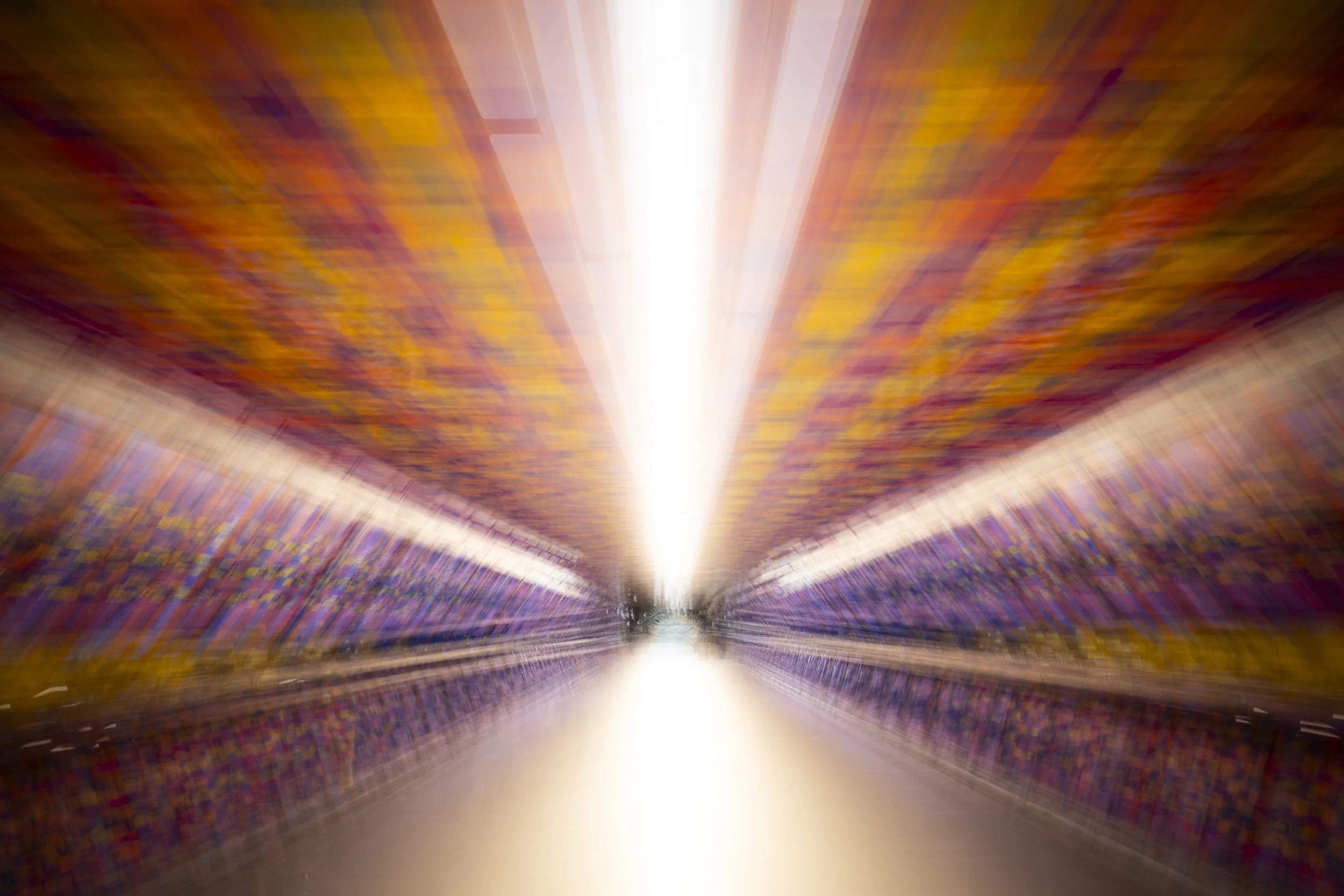
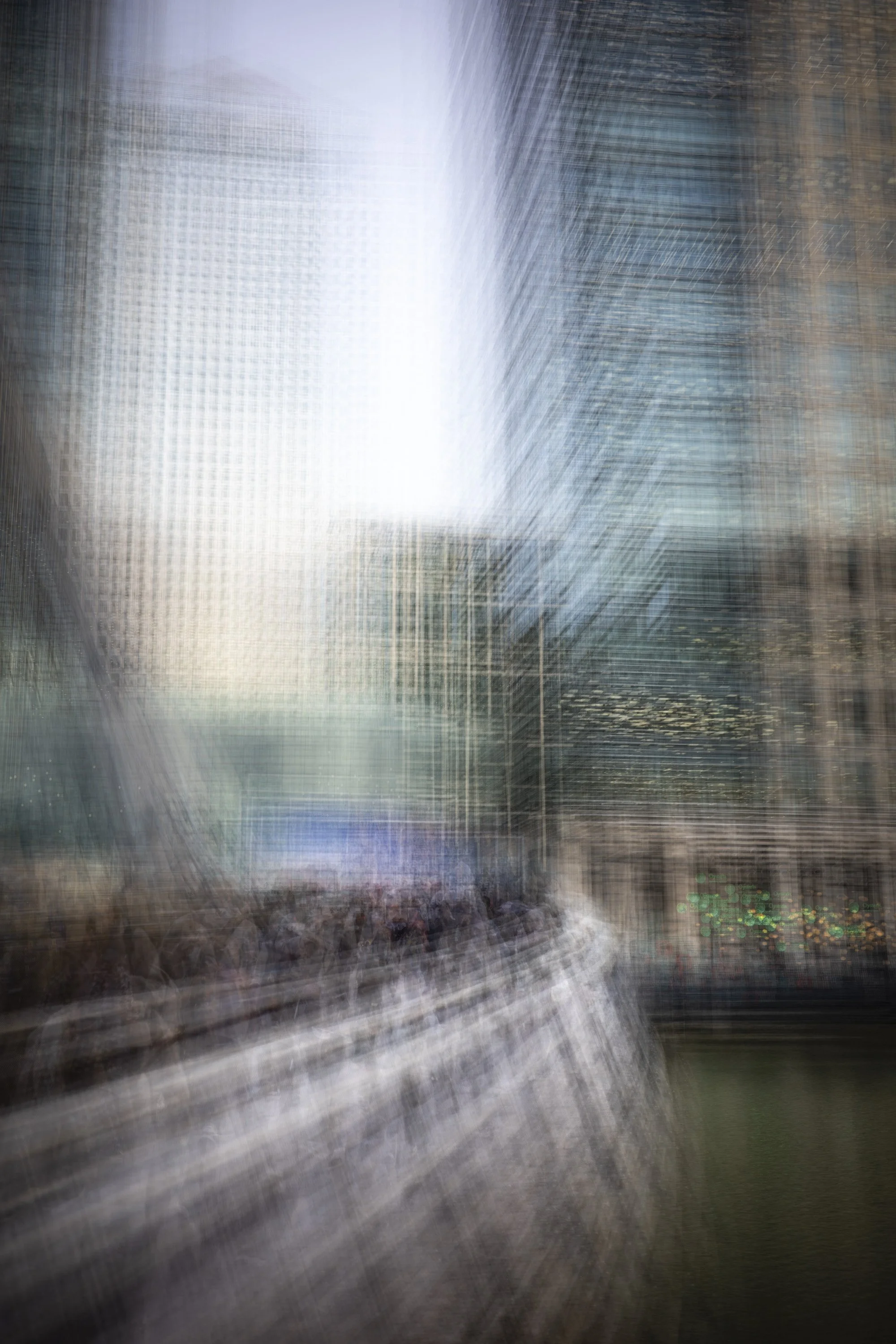
The walkway to the DLR station in Canary Wharf
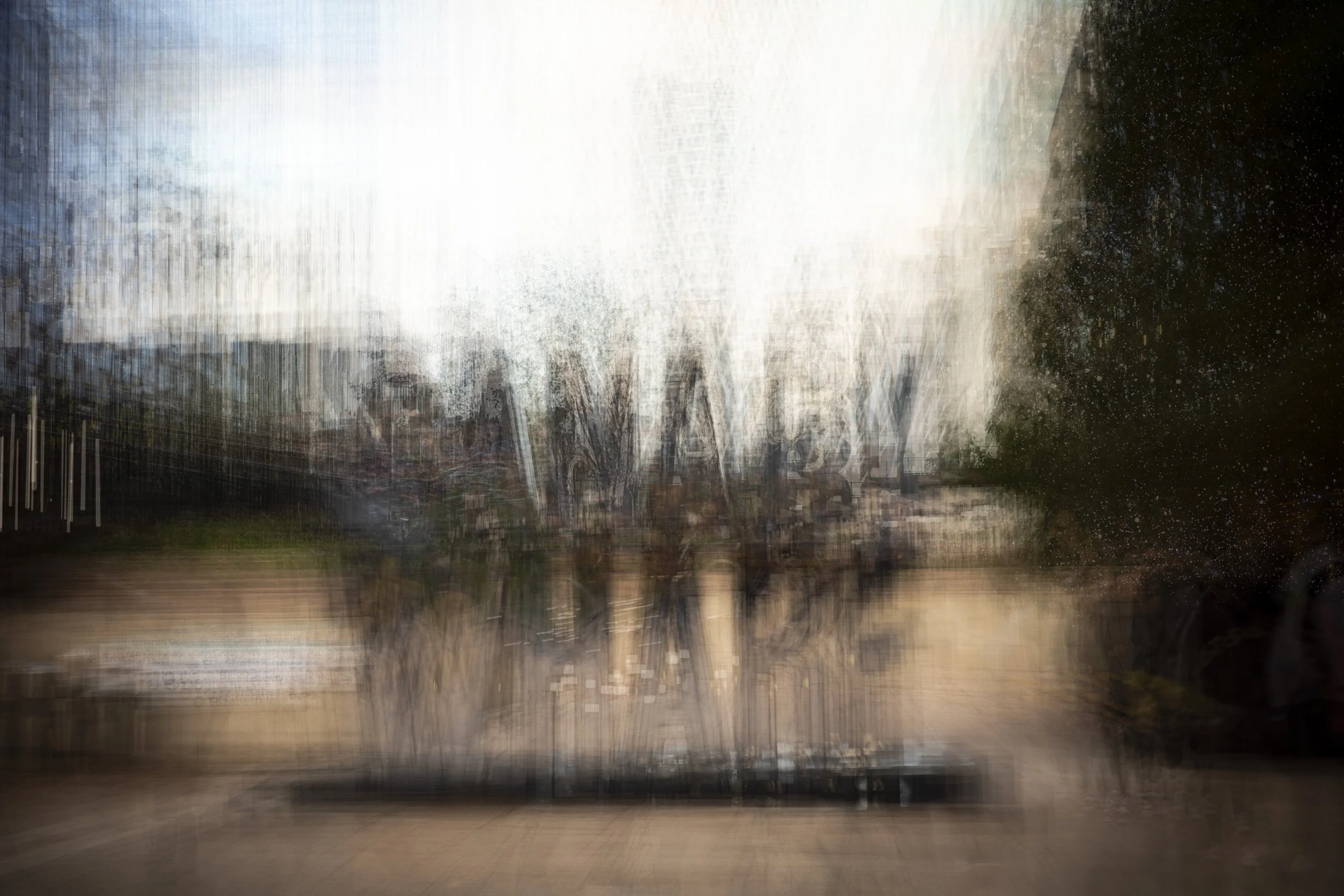
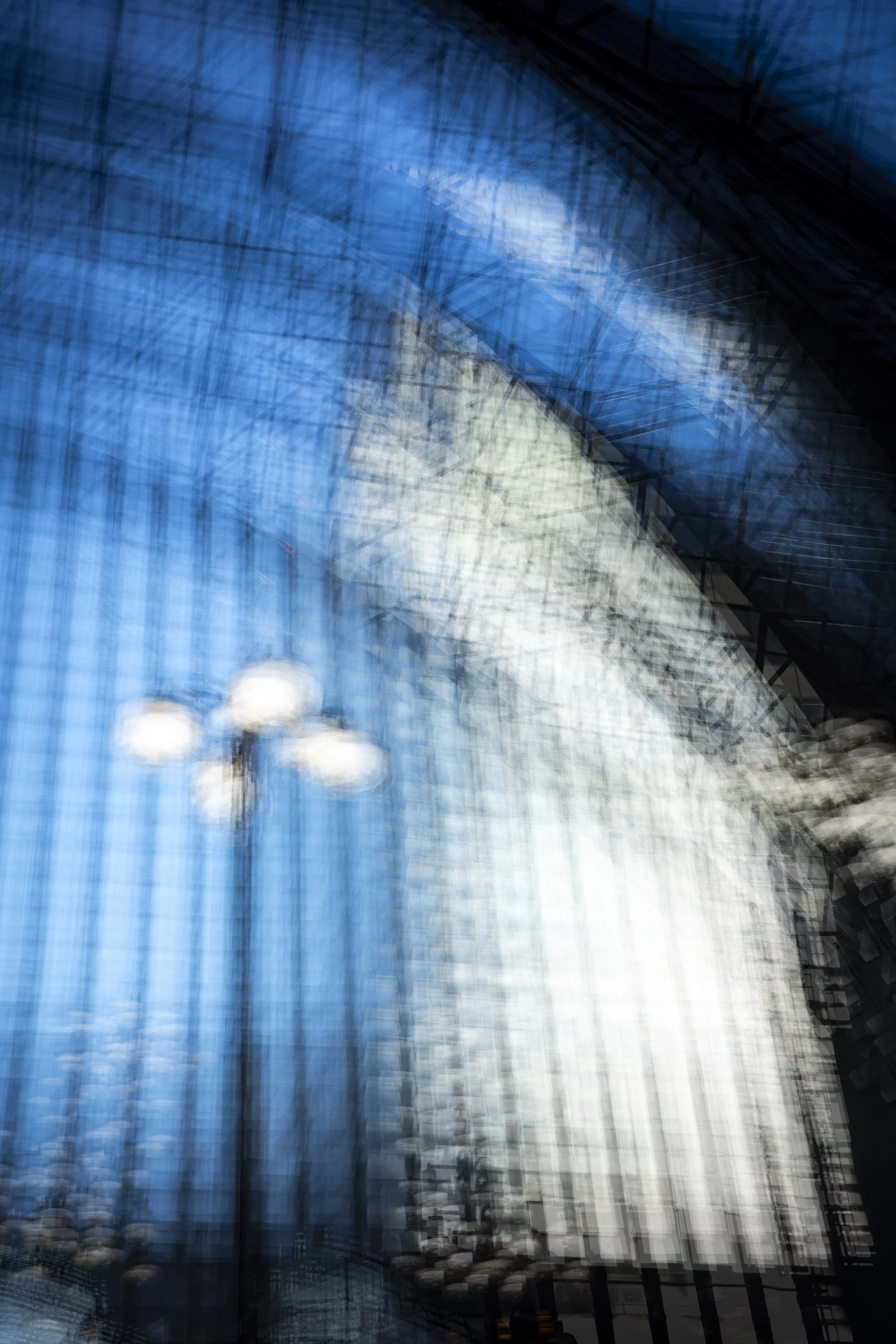
A forced trip to London meant another chance for me to experiment with my impressionistic in-camera multi-exposure composite technique.
I described the technique a few posts ago if you’d like to know more about it. I also used it to document over-tourism in Florence in a new and innovative way. In short, my Ricoh GR3x HDF has an operation mode that allows you to overlay multiple frames on top of each other in the camera, and see progress as you go along. I haven’t found a limit to the number of shots I can overlay yet, and routinely use 50-60 frames in the images you’ll see here. This is unlike other cameras I’ve used that either have a limit of, say, nine frames, or require you to enter the number of frames to overlay prior to starting the sequence.
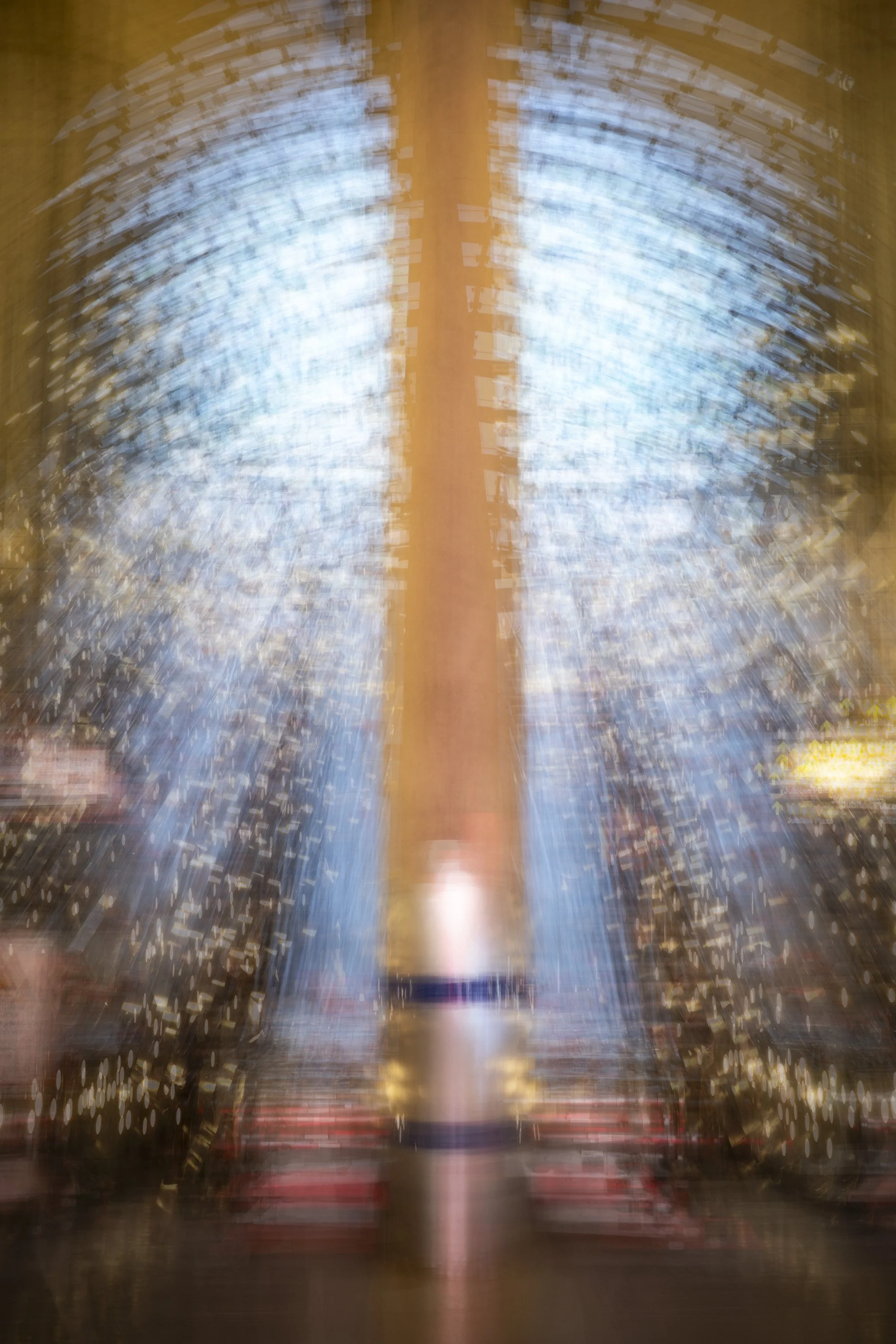
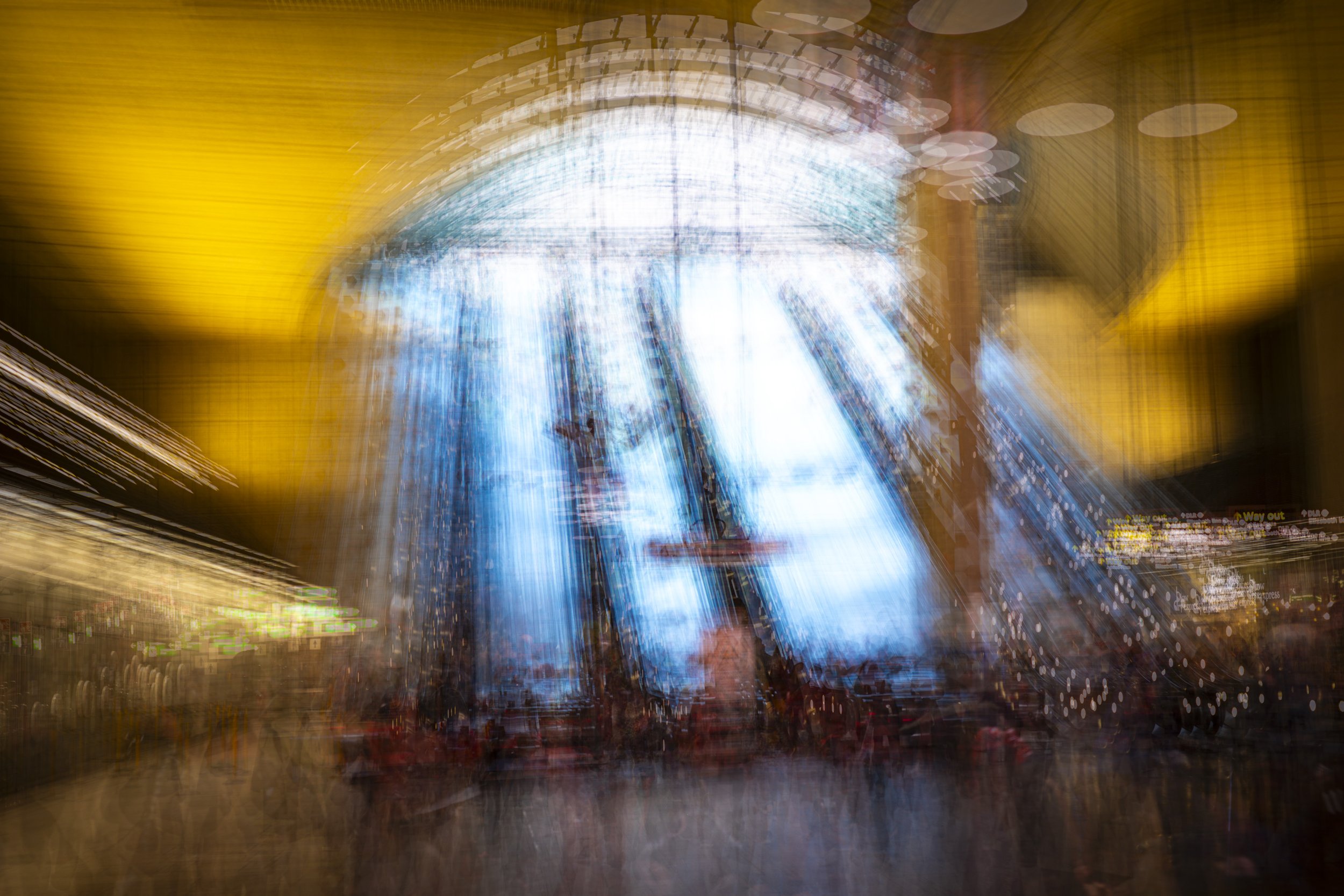
The main exit of Canary Wharf tube station
By moving the camera between frames, either by adjusting my own position step by step, or by slightly moving the camera, a surreal and impressionistic image takes form on the back of the camera.
Amazingly, the little Ricoh can create a RAW file of the final composite, as well as a JPG. This seems unique and is a very welcome feature, and it allows a lot of editing flexibility as is the way with RAW files. I am not 100% sure how the camera does this, as a RAW file contains the exact readout of the sensor, but I guess the camera software must apply the composite processing to the RAW file that is shot as well as to the JPG when running its “average”, “additive” or “bright” algorithm. This would account for why it takes four to five seconds of processing per frame.
As I have become more experienced with this technique, I have learned a bit more about what works and what doesn’t.
Some scenes look like they could be amazing, but the resulting composite just looks rubbish (technical term).
I have found that, just like in “normal” photography, a good composition is essential. But with composites like this, things are a bit different. A bold and distinctive shape is required to provide a key to the shot. A delicate composition with a lot of detail tends not to work, as that detail gets lost during the overlaying process.
Strong lines are therefore the order of the day, the more dynamic the better. And if you can include some lights in the shot you can get some very cool effects as in the shot of the Canary Wharf tube station exit above or Borough Market below.
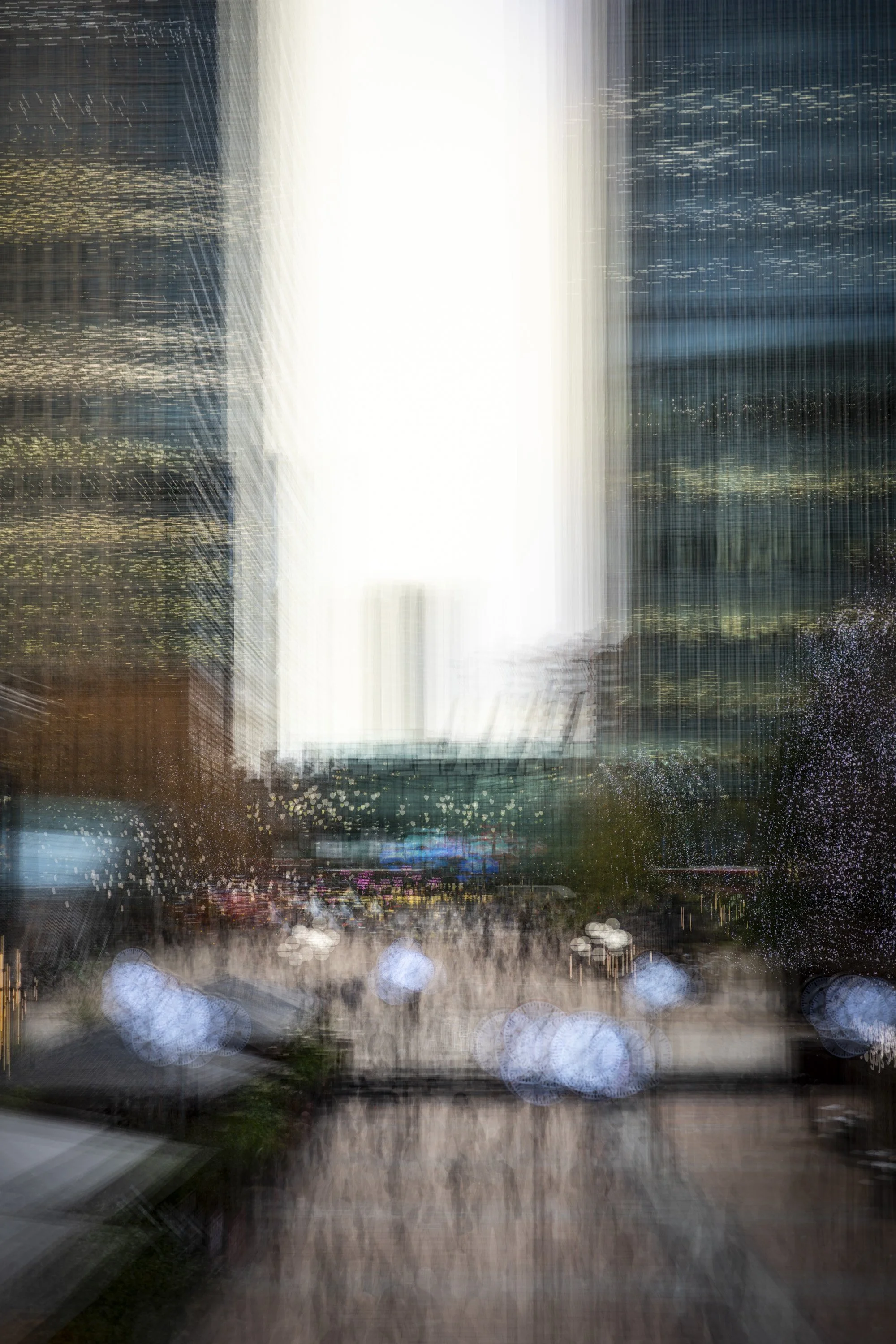
I have also learned more about how much to move the camera. In large expansive scenes such as the tube station shot, it is OK to move quite a lot, by which I mean ten steps left, right forward and backwards. In tighter, closer compositions like Borough Market below, far less movement is needed. For that shot I took just one step in each direction, and moved the camera up and down from chest height to above my head.
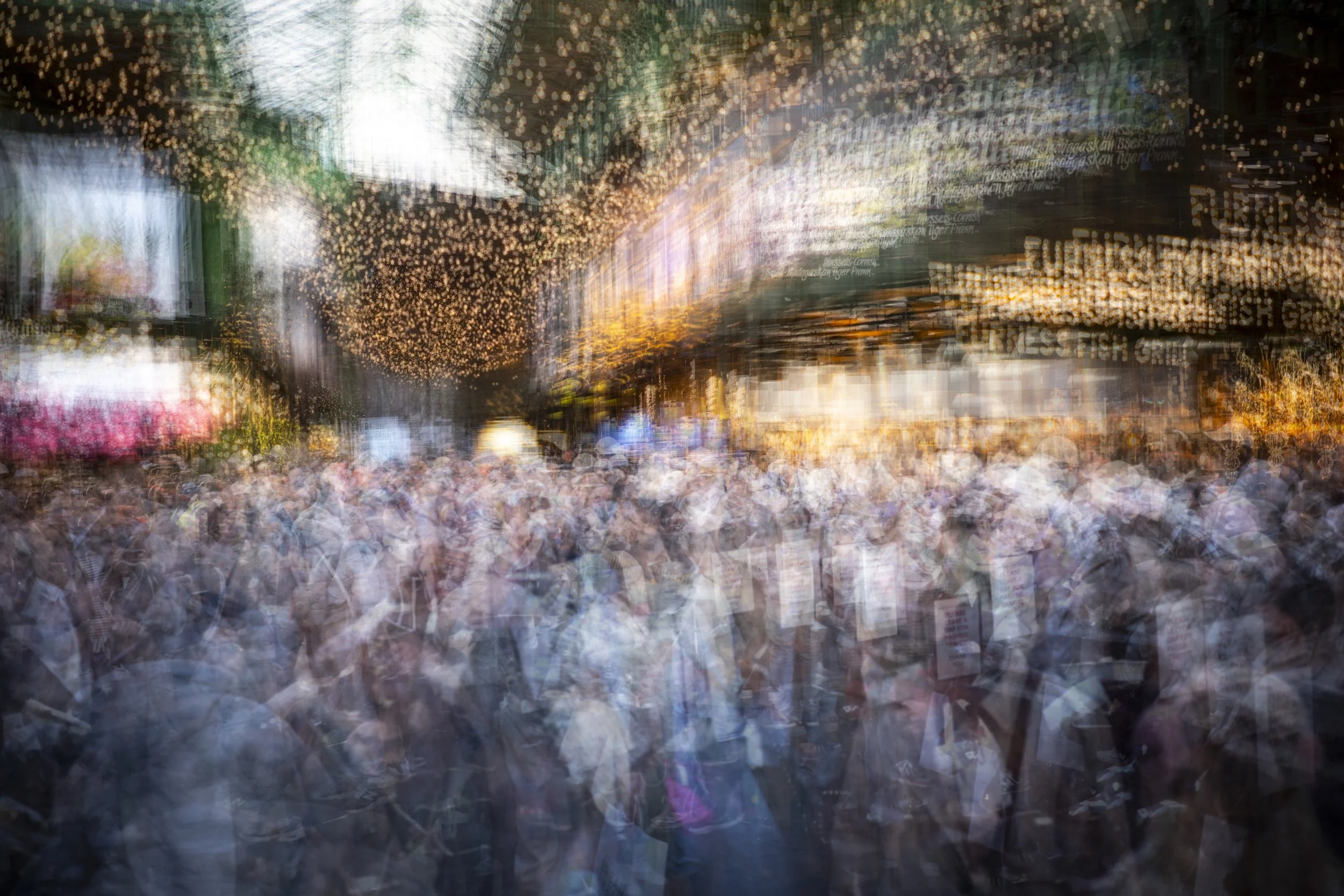
Hordes of visitors enjoy the stalls and lights at Borough Market in this shot reminiscent of my over-tourism series from Florence
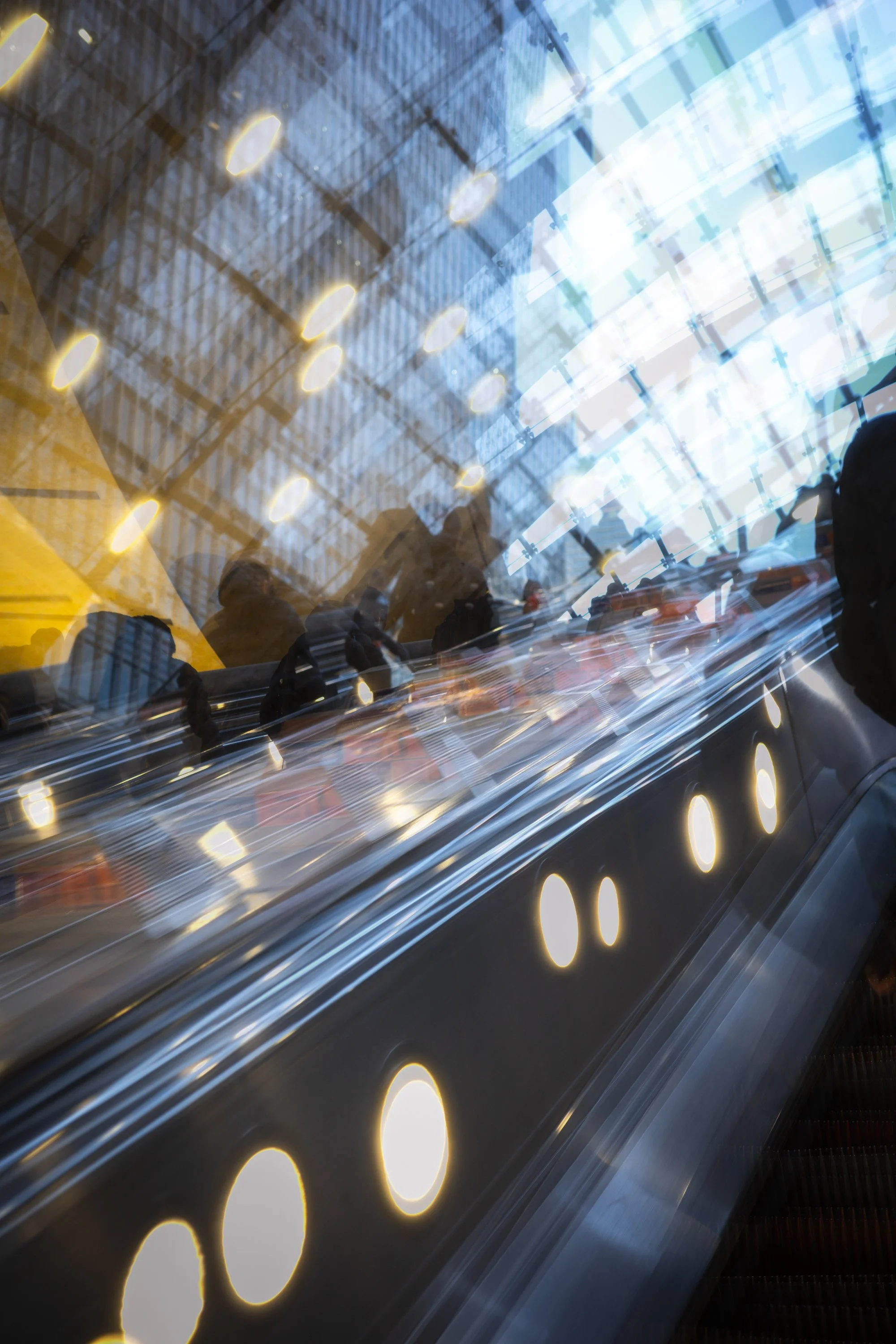
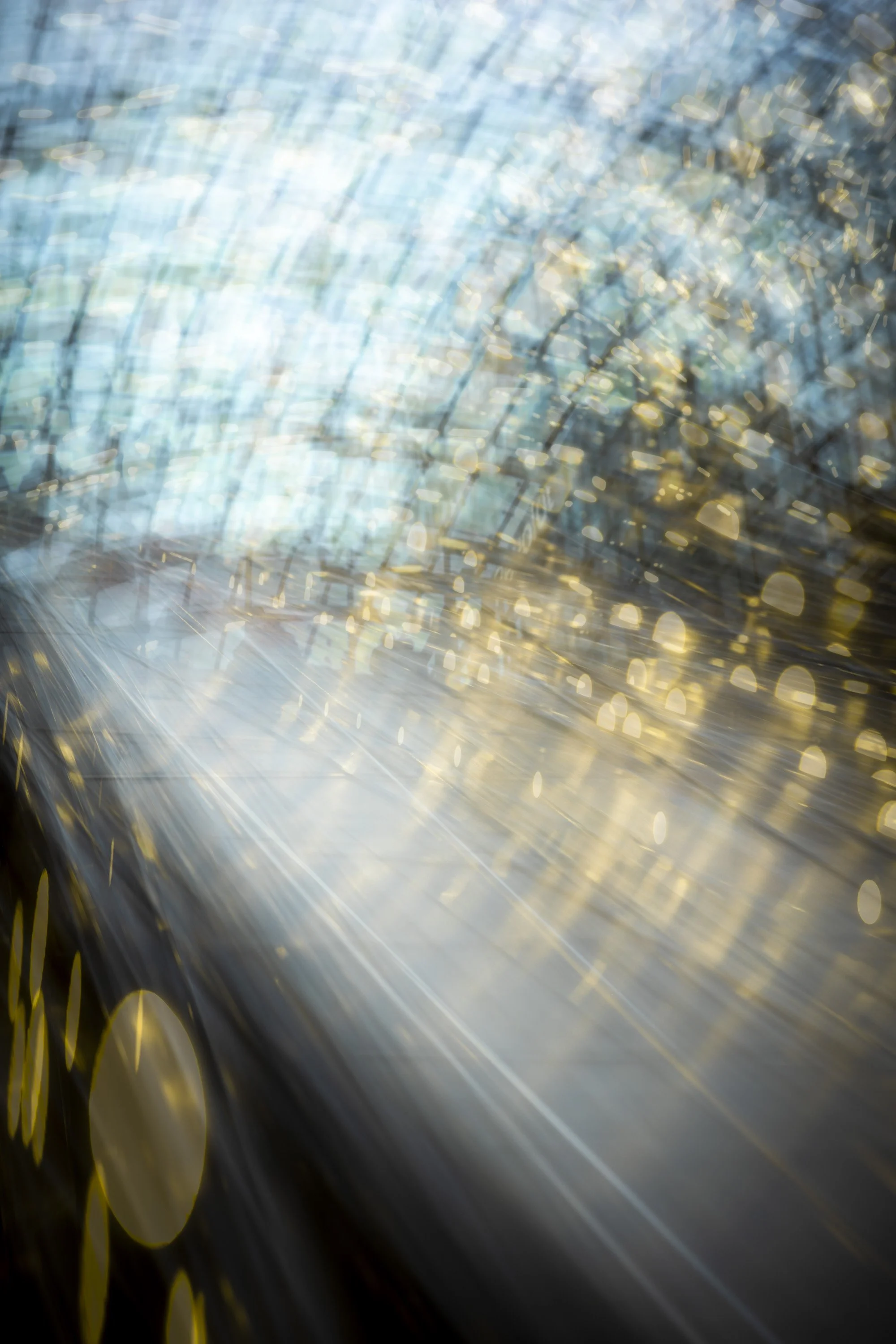
For the first time I also tried shooting a composite while moving on an escalator while exiting Canary Wharf tube station. This is rather weird but quite interesting technique. To get sufficient frames for a decent result, I ended up riding the up-escalator about 10 times per composite, trying to ensure I didn’t let the camera power down between trips (which results in loss of the composite being working on).
With a lot more movement of me and the camera than “usual”, the resulting images are much more surreal and abstract. The location has a lot of spotlights which made for some very cool effects which you can see in the two images in the gallery below. I’ll certainly give this approach some more investigation as I think there’s a lot of potential for some cool results from, say, the front of the upper deck of a bus.
Ket things learned from this session:
pay more attention to bold shapes in compositions
the “average” mode tends to wash out colours, so adjustment in post-processing is needed
white balance tends towards very cool, so warming up is needed afterwards
loads of editing flexibility is available when using RAW composites
“Impressions of London” gallery. “Impressions of Florence” gallery.