
Flashback: Shooting Helicopters
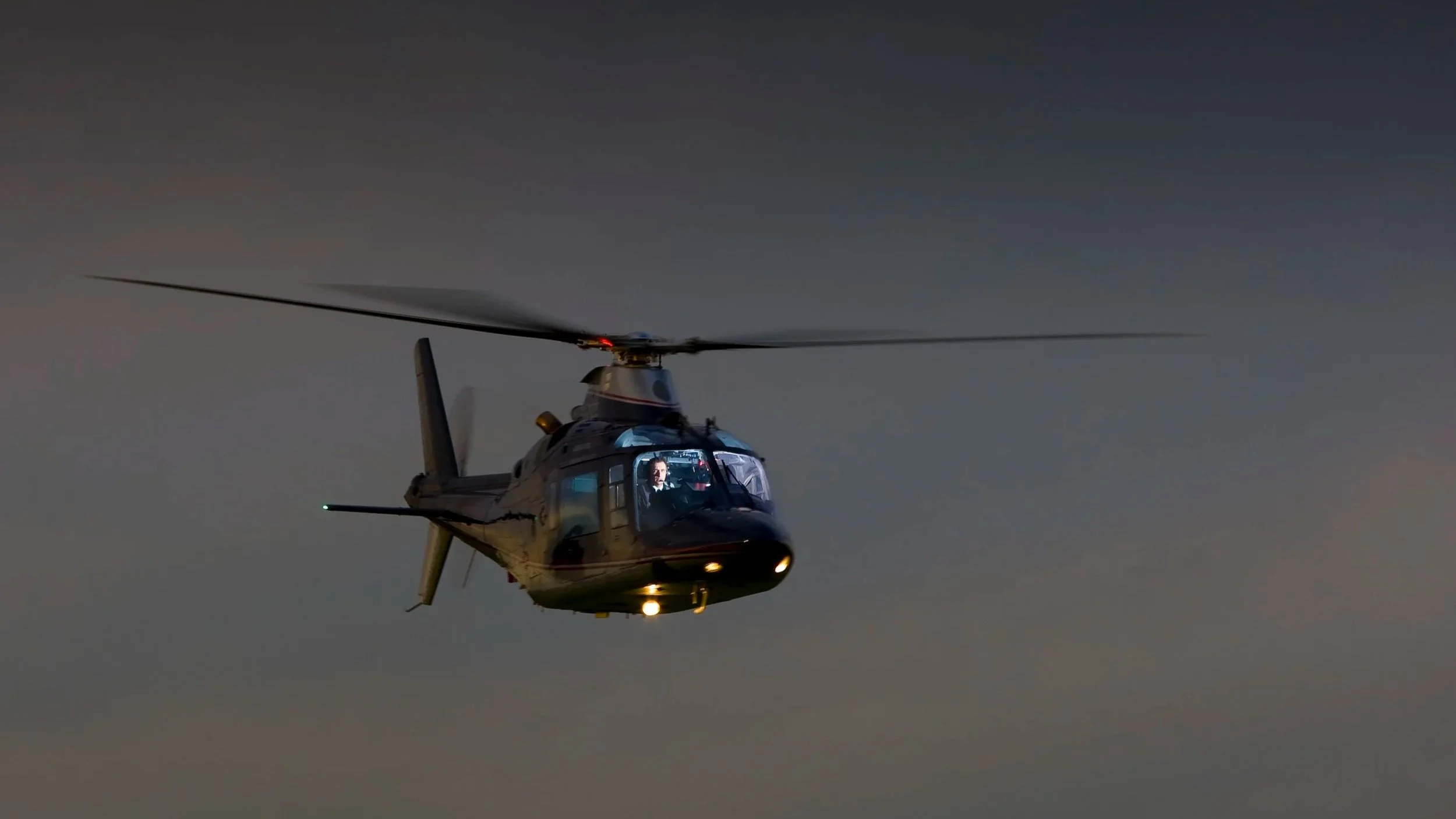
Radio-triggered remote flash used to illuminate the cockpit of this Agusta AW109
For some reason a shot by Joe McNally from 2017 recently popped up on my social feed. It shows a person hanging off the skids of a helicopter as it flies over New York City. What is very cool about the shot is the way that it is lit. Coloured flashes placed in the helicopter are triggered using radio from Mr McNally’s camera, which he is using in another helicopter flying in front.
Nine years earlier in 2008, I was doing something similar, albeit over Redhill Aerodrome rather than New York City. McNally’s image brought back vivid memories so I thought I’d dig out my old shots from way back and tell you all about it.
I had been inspired by David Hobby’s “Night Chopper” shoot. Hobby popularised the use of cheap, off-camera speedlights (flashes) in the mid 2000’s, and I was a huge fan, learning a lot from his brilliant blog posts. I still use techniques I learned from him to this day. I thought “I could do that”. But had the small issue of lacking a helicopter.
However, help was at hand. At the time I was photographing polo for Hurtwood Park Polo Club. One of the teams was run by the owner of Rotormotion, a high-end helicopter charter company. I had a good chat with Philip and offered some unique PR imagery for his website in return for joining me in this little experiment. It was one of those rather crazy “I’ve got this weird idea….” conversations that are often scary to have, but usually work out incredibly well.
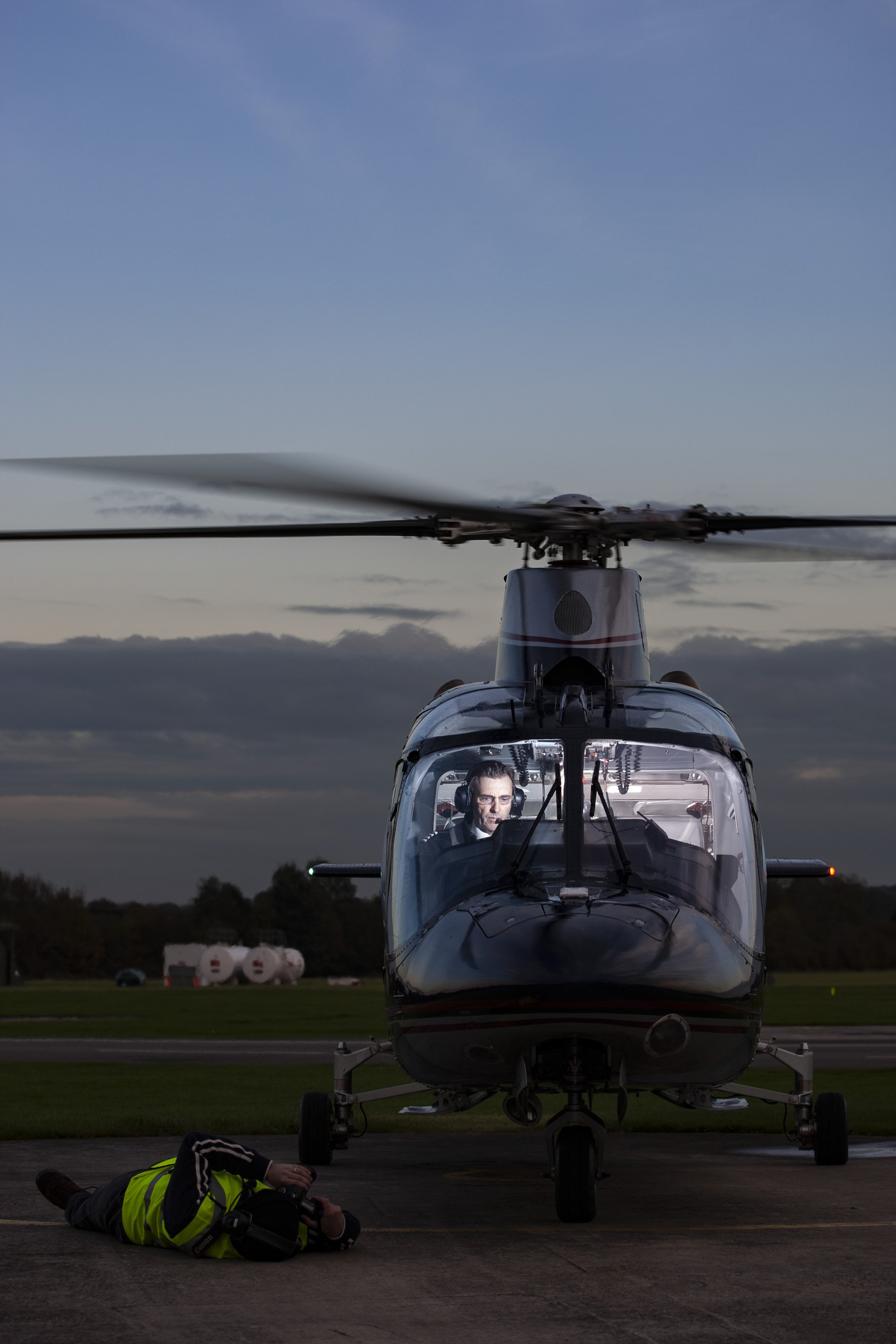
Gordon totally understood his assignment, here getting a lift-off shot for me.
I needed some more help as well, and my friend Gordon volunteered to assist. As well as technical help, it’s always good to have a friend on hand to help to bounce ideas and solve problems on location.
A date was set, and furious planning followed.
Gordon and I worked out that we ideally wanted a head-on shot with the helicopter looking as straight and level as possible. We also wanted to photograph at dusk, with some light in the sky but not so much that it would overwhelm the light from the flash inside the cockpit. Getting that light balance would prove to be one of the most tricky aspects of the shoot (aside from not dying).
I listed all the gear I’d need. My Canon 1Dmk3 with a 70-200 f/2.8 lens was the weapon of choice. Accurate, fast and extremely capable, it was just what I needed. A couple of cheap Yongnuo flashes would provide the light. I already had Pocket Wizard Plus II wireless flash triggers. These are very simple items that just transmit a “flash now!” signal from the camera to the flash. One goes on the camera hotshoe, and the other is connected to the flash.
There’s no remote adjustment of the flash power with these early model Pocket Wizards. They literally just go “ping”. However, they are extremely reliable and work over long distances.
But would they work inside an electronically-laden helicopter in flight over 100m away?
Gordon and I did a bunch of range testing. I was already pretty happy with the range of the Pocket Wizards which we re-confirmed, but we wouldn’t know everything would work for sure until we had the flashes and triggers inside the powered-up helicopter. With some trepidation, we headed over to Redhill Aerodrome on the appointed day.
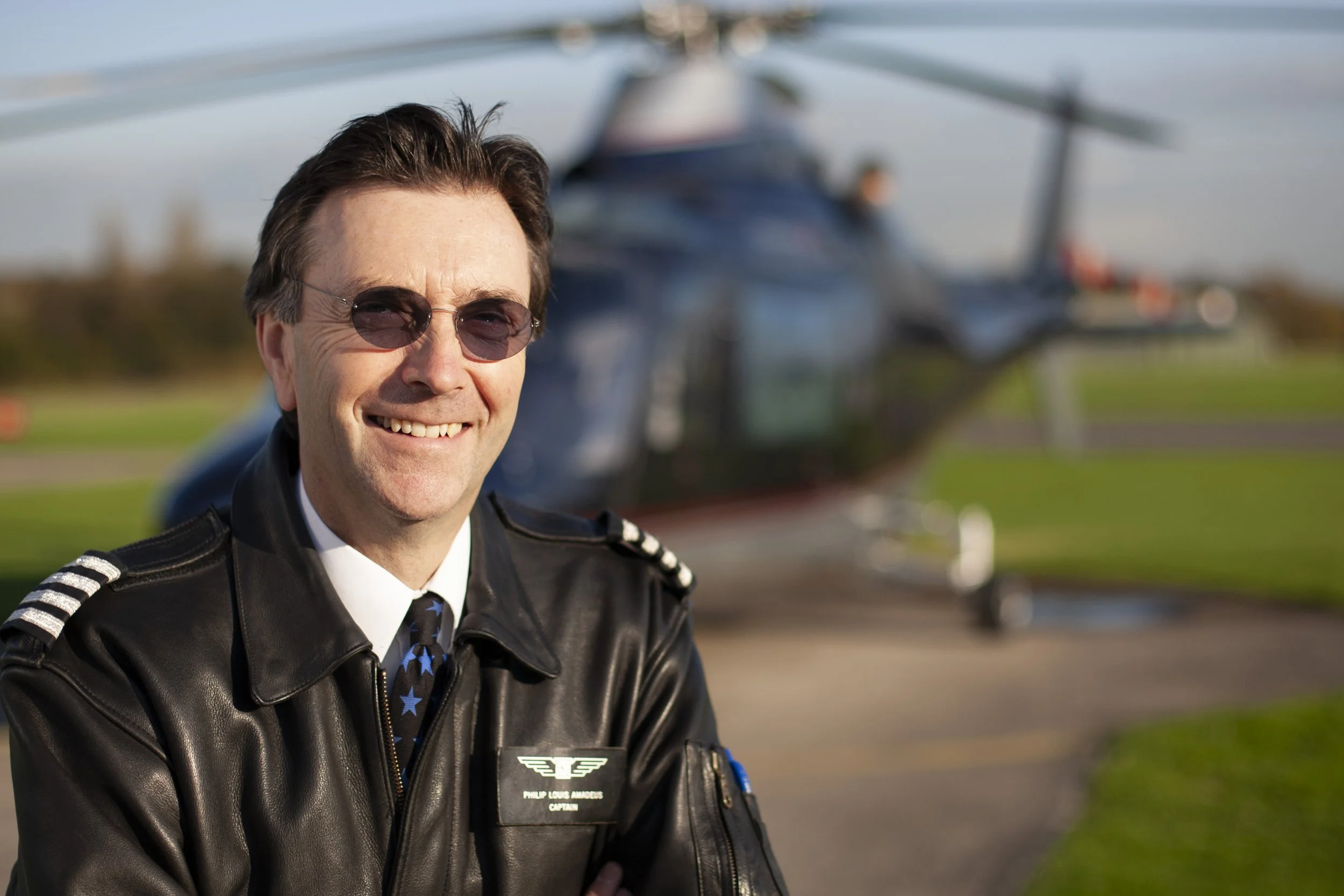
Portraits done while we waited for dusk.
We spent a good amount of time going through the plan with Philip. As expected, he was extremely professional and asked lots of questions. I described the sort of shot I wanted as the “feature image” (the one at the top of this post), and we worked out what would be needed to get it. Shooting from the ground meant that the aircraft would need to be angled down towards me so he figured out a pattern to fly to do that. We also needed to work out a set of hand signals to use to communicate while he was flying.
One of the principal concerns was whether the Pocket Wizards would interfere with the aircraft’s avionics, and whether the flash would distract him while he was flying. Some on-the-ground testing was in order before we got anywhere near any flying.
It was at that point when Philip asked which helicopter we’d like. I have never been offered a choice of helicopter before, and likely never will again. The hanger had a couple of Agusta AW109s in it, which are like flying limousines. One was all white, but I chose the darker blue one so it would look “meaner” and the flash lit cockpit would stand out better against the dying light.
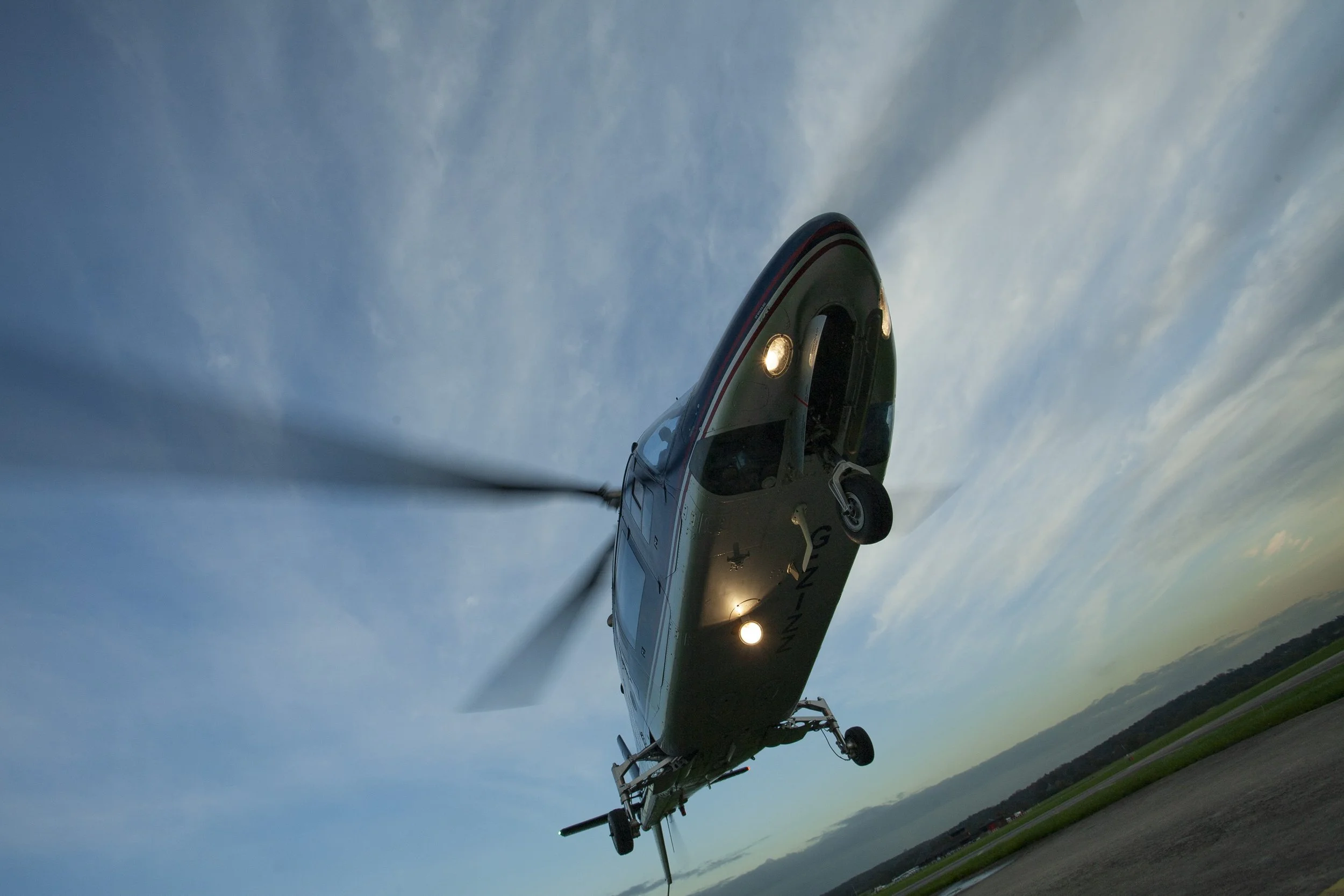
Up close and personal. Gordon’s wide-angle shot of the takeoff.
The aircraft was wheeled out of the hanger, and Gordon and I worked on rigging up the flashes in a way that wouldn’t interfere with the controls or fall off into the rudder pedals. We elected to go with one flash in the left side of the cockpit facing the pilot, and another illuminating the rear leather-clad passenger compartment. Manfrotto Magic Arms secured the flashes into position. With the helicopter powered on but without the engine started, we confirmed that the flashes didn’t interfere with anything. It seemed like we had about 70m of reliable range on the Pocket Wizards. We still had to check again with the engine running, but that would come later. Philip confirmed he wasn’t distracted by the flashes. The one in the cockpit was set well to the side so barely made it into his peripheral vision.
We had a bit of a break to do some nice PR-style portraits of Philip in context with the helicopter, flying jacket and shades. These all worked really nicely and provided a good bunch of images that would be used for many years to come.
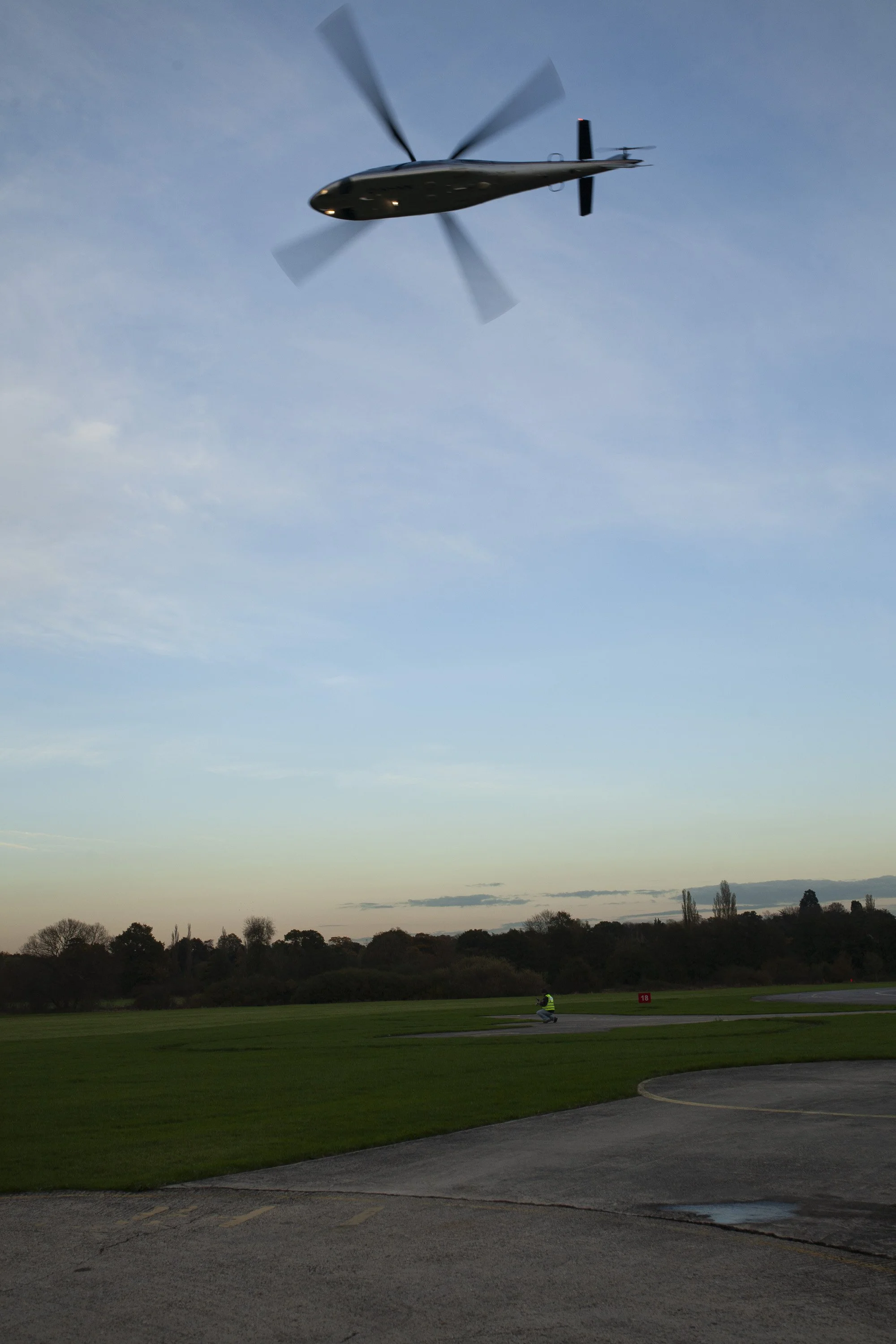
Some serious flying was needed.
The sun set and light levels started to drop so we moved into action. Our earlier testing, with Gordon in the pilot’s seat, had confirmed roughly what flash power we would need.
Because I couldn’t adjust the flashes remotely, I needed to get the power set prior to takeoff. With Philip now in position, I did some more flash power tests and settled on a setting that would work.
Balancing the ambient light with the flash was most important. I wanted the aircraft and sky to be slightly underexposed so the lit cockpit showed up really well. Another key consideration was having some rotor blur while keeping the aircraft sharp and in focus. This would reinforce that the helicopter was flying, otherwise it might look too static and frozen.
Earlier testing with randomly operating helicopters at the airfield gave me a shutter speed of 1/125th, so that was my main parameter. Aperture didn’t really matter too much other than to keep the shutter speed at 1/125th and I started at f/8. I kept ISO as low as possible at 100.
With the engine fired up and the rotors spinning, we did some more tests of the flashes and Pocket Wizards to confirm there was still no interference. Everything looked good. I checked the kit was still secured, and put new batteries in. Philip confirmed clearance from the control tower to carry out some rather unusual flying (compared to normal airfield takeoff and landing behaviour).
I had asked Gordon to get some wide-angle (unflashed) shots from underneath of the helicopter taking off and he did this rather heroically, lying under the rotors as it lifted up. These worked out really well as you can see in the image further up this post.
To get the right head-on and side-on angles of the helicopter, Philip had to bank very sharply and chuck the nose right down. It was majestic to watch as the aircraft flashed overhead, twisted around and came back for another go. Absolutely superb. You can see in the shot above just how dynamic the flying was.
We had agreed for Philip to fly for five minutes and then land. This let us check the shots, and determine if we wanted to have another go. Indeed this is exactly what we did. I needed a bit more angle to make it look like I was flying in another helicopter rather than being on the ground, so showed Philip the pictures from the first run and he could see straight away what I needed. Off he went again.
In the meantime the light had dropped a bit more, so I had to open the aperture up to f/4 to keep a 1/125th shutter speed with the ISO staying at 100. Some more amazing flying later, and we were done. Looking at the pictures on the back of the camera, I knew I had what I wanted. We were all thrilled. A well planned shoot executed flawlessly, with great cooperation and communication throughout.
Back home for some backing up of these precious shots, and some editing. Not much tweaking was needed actually. I just looked through the out-of-the-camera RAWs as I was writing this article and the shot below is barely adjusted. Nice.
What an experience.
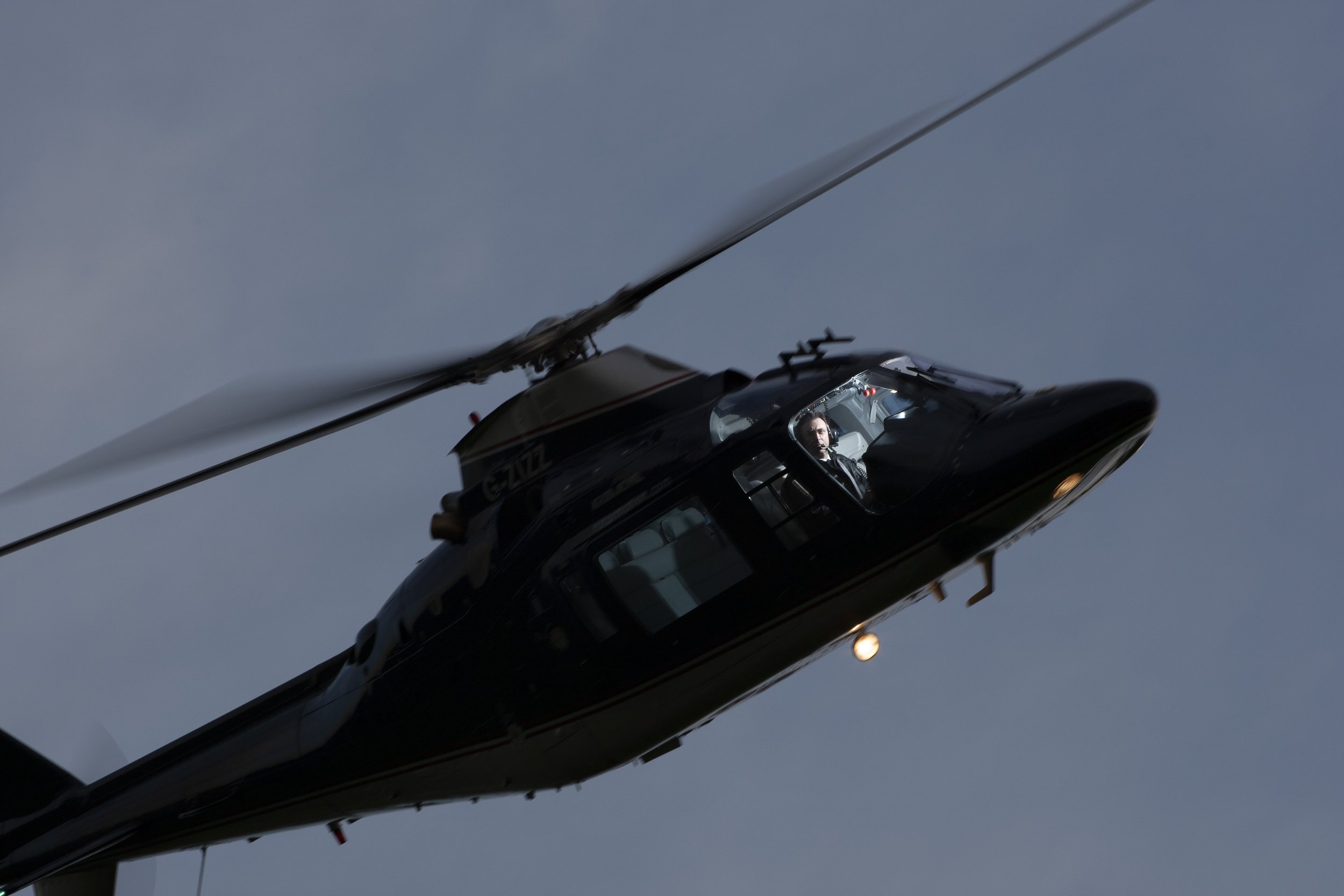
Much epic.